Glass at the front door can make an entry feel generous and connected to the home, but it can also create a sightline where one is not wanted. The right privacy choice is rarely about making every pane opaque. It is about deciding what should be visible, what light the foyer needs, and how the whole opening should feel from both sides of the door.
Privacy works best when it is planned with the door, sidelights, transom, porch, and nearby windows in view. A treatment that looks private on a small sample can behave differently at night, when interior lights are on, or when a visitor stands close to the glass. Start with the view you want to control, then choose the glass, pattern, and configuration that serve it without making the entry feel closed in.
Start with the actual sightlines at your entry
Before comparing glass names, stand at the front door in the moments that matter. Look out from the foyer during the day. Then look in from the porch, sidewalk, driveway, and the place where visitors naturally wait. A direct view into a living room or staircase needs a different answer than a small glimpse of a vestibule. The height of the glass matters too. A pane may need privacy at eye level while remaining clearer above or below it.
Notice the approach to the house. A front door at the end of a long drive has a different privacy need from one a few feet from a public sidewalk. A covered porch may create shade outside, while a bright foyer can make the interior more visible at night. Nearby streetlights, landscape lighting, and a glass storm door can also change what people see. These are not fussy details. They determine whether a glass choice feels comfortable after the first few evenings at home.
Decide whether privacy is the only job the glass has to do. Many homeowners want to keep a bright entry, show a decorative threshold, or preserve a view toward a garden or front walk. In that case, the goal is controlled visibility rather than total obscurity. A custom iron entry door can balance glass area, divided-light pattern, and frame around the conditions of the actual home.
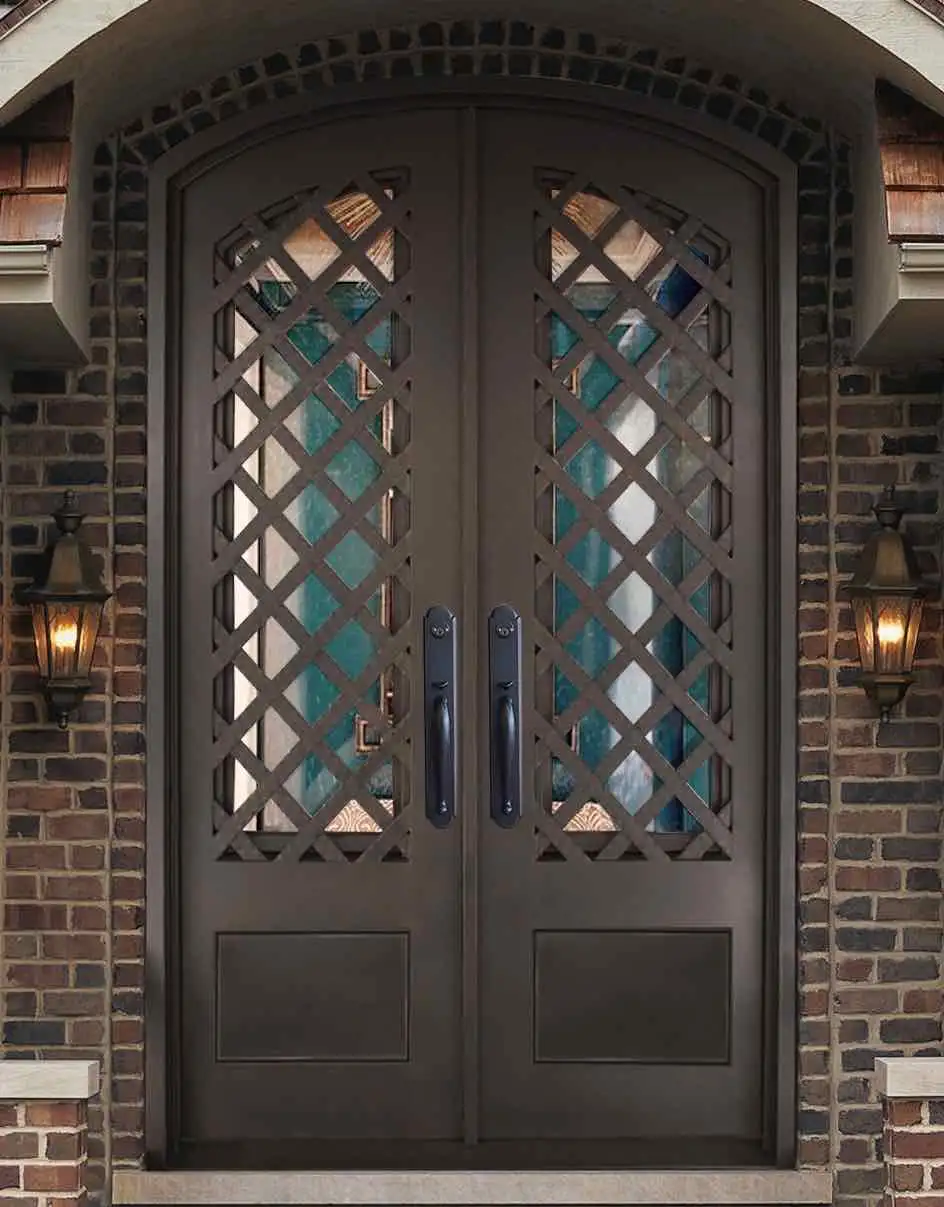
Front door privacy glass options, and what each one changes
Privacy glass is not one material. It is a family of approaches that filter, distort, interrupt, or redirect a view. Judge the choices in a full-size setting whenever possible, because a small sample cannot show how daylight, distance, and nighttime illumination affect the result.
Frosted or acid-etched glass
Frosted glass creates a soft, even diffusion that reduces direct views while keeping a bright feel. It can suit a clean-lined or contemporary entry because the surface reads as calm from both inside and outside. It is useful where the main concern is an unobstructed view into the foyer, not the outline of someone standing immediately behind the pane. A heavier treatment generally gives more obscurity, but it can also make the glass read as whiter and flatter in certain light.
Rain, bubble, and other textured glass
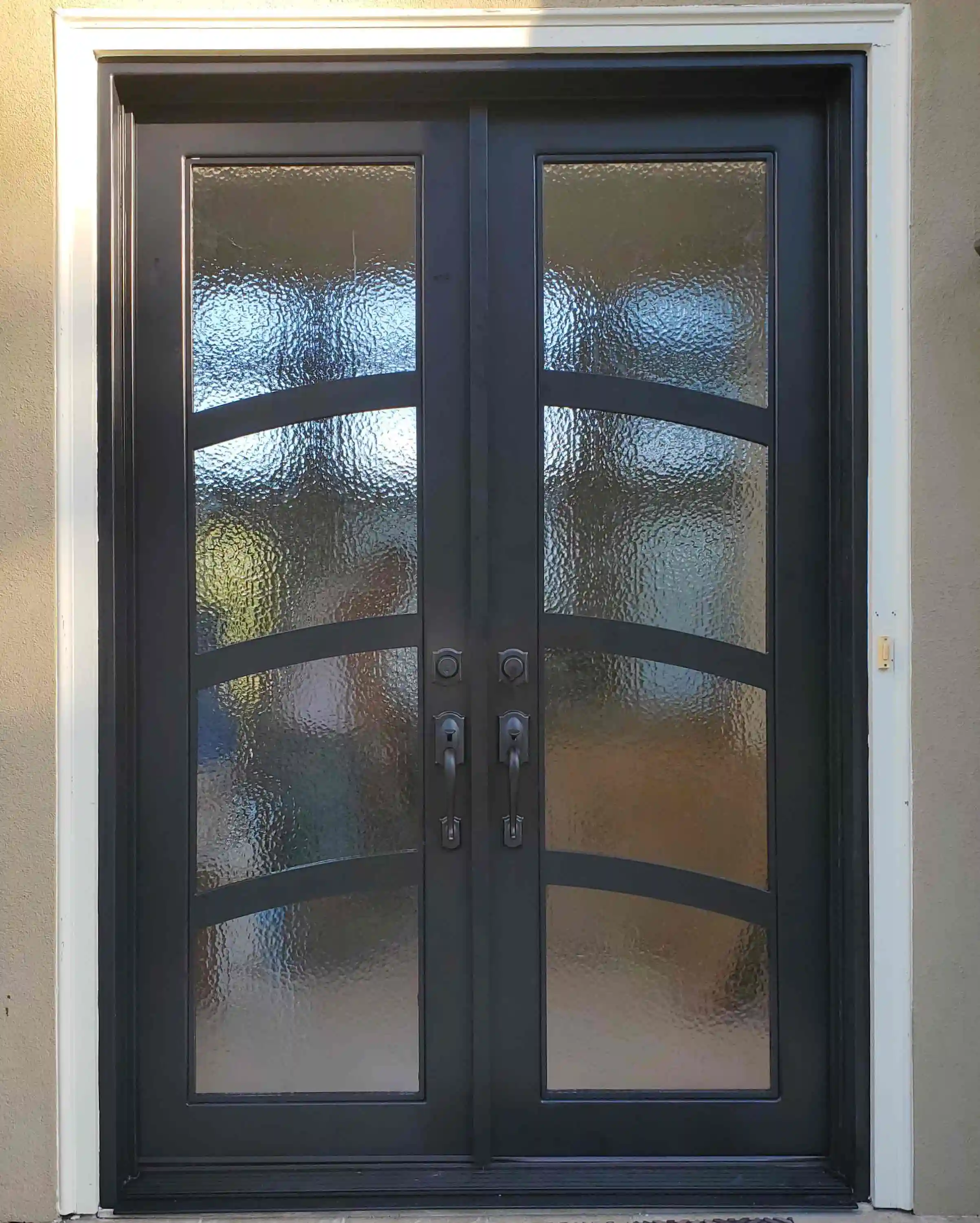
Textured glass bends the view rather than simply whitening it out. Rain glass can create vertical movement that feels natural with a tall entry. Bubble glass has more visual activity and can suit traditional or expressive ironwork. These options preserve daylight and add detail, while making faces, furnishings, and interior depth less clear from outside. They are often the better answer when the entry needs privacy without looking sealed off.
Decorative divided glass and ironwork
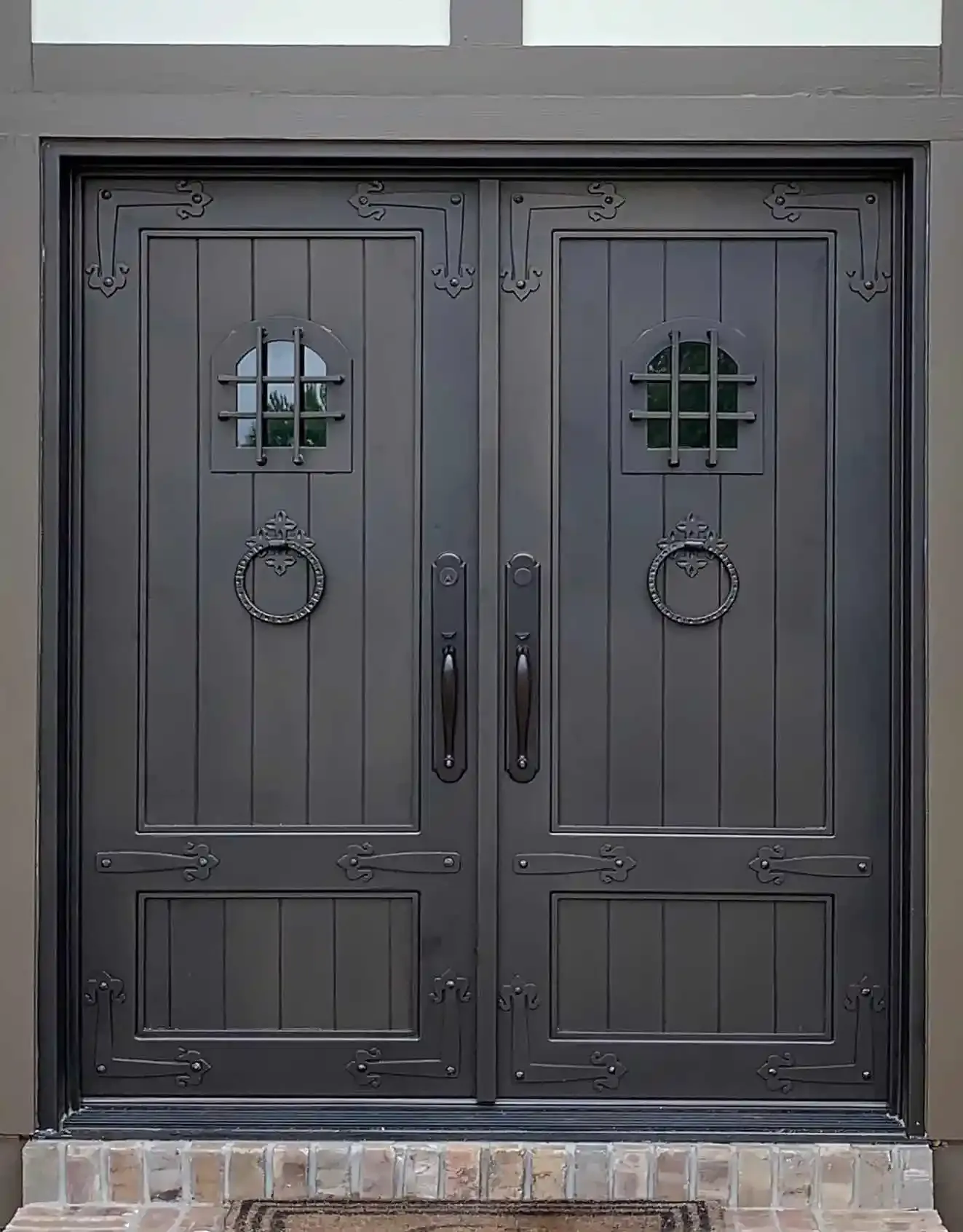
A divided pattern can provide privacy by breaking up a large sheet of glass into smaller visual fields. The design does not make the glass opaque, but it interrupts long sightlines and directs attention to the door’s architecture instead of the room beyond it. This is useful when clear or lightly textured glass is important for daylight but the opening needs more presence from the street. Explore the door collection to see how panel layouts and ironwork change the amount of open glass.
Layered or laminated decorative glass
Some privacy effects come from a decorative layer within the glass assembly. These choices can combine pattern, tone, and obscurity in a more tailored way than a surface treatment. The practical questions are whether the pattern looks right from both sides, whether it fits the door’s glass system, and how it will read beside nearby clear windows. When performance matters, compare the rating for the complete door unit rather than assuming the visible glass style tells the whole story. The National Fenestration Rating Council explains the labels used for exterior-door performance, including U-factor and solar heat gain information.
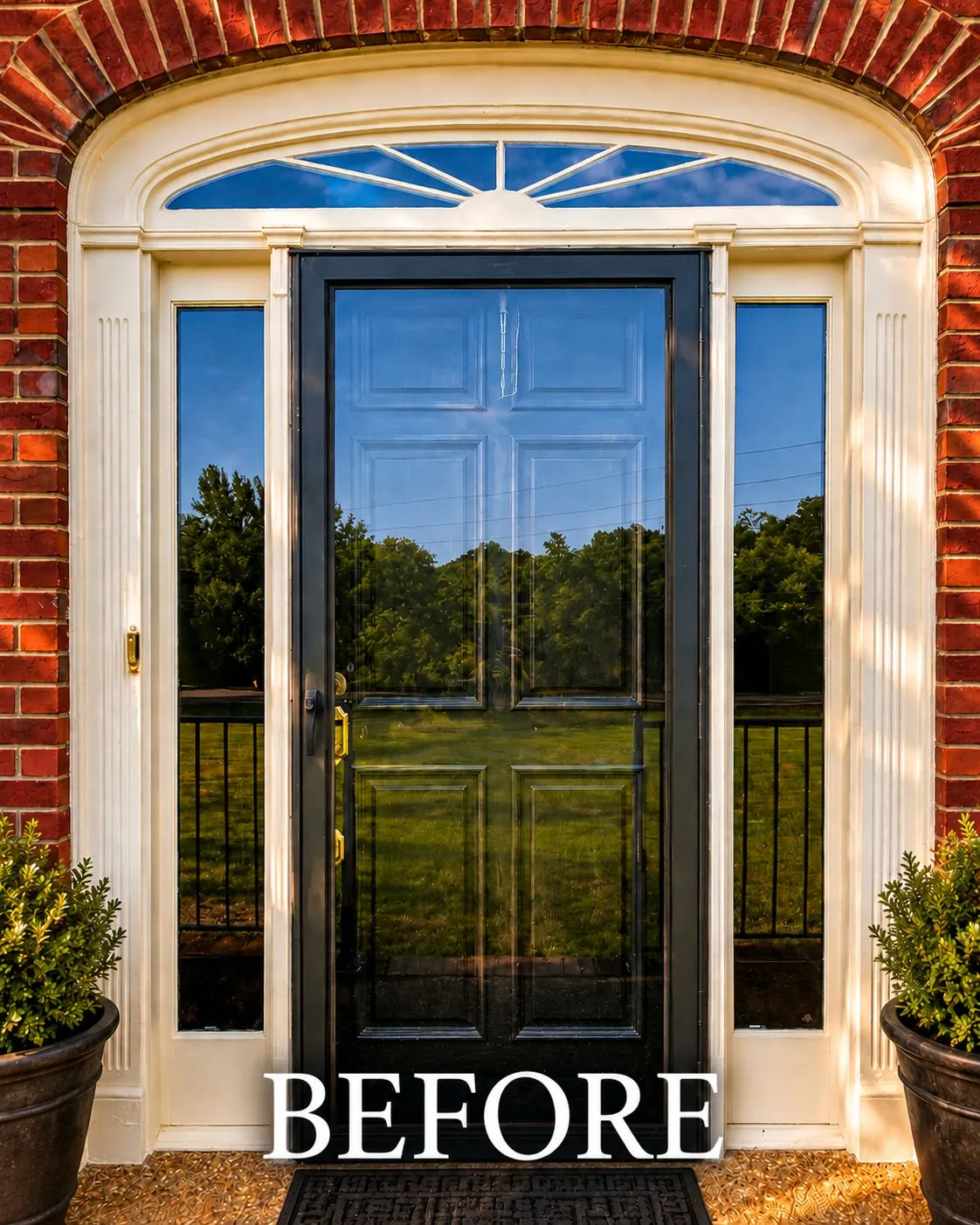
Why daytime privacy and nighttime privacy are different
Glass often feels more private during the day because the brighter side of the opening tends to dominate the view. But that relationship can reverse after dark when the foyer is lit and the exterior is dim. Even textured or frosted glass can reveal more of a silhouette when someone is close to the door and the room behind them is brightly illuminated. The same glass may still be a good choice, but it should be selected with this condition in mind.
A useful test is simple. View the entry from outside at night while the interior lights are set the way they usually are. Have someone move through the foyer, sit in the room closest to the door, and stand near the glass. Then decide whether the concern is seeing shapes, seeing details, or simply feeling exposed. A treatment that is perfect for blocking details might not hide an outline. If the entry is directly visible from a busy street, that distinction matters.
Exterior lighting can make the approach feel safer and more welcoming, but it is not a privacy treatment by itself. A porch light can make the outside plane brighter, yet it can also make a visitor more visible through clear glass. Interior shades or drapery can add nighttime control, though they change the look of the entry and may block daylight when they are closed. Planning the glass well reduces the need to rely on a second solution every evening.
Choose privacy based on how the front room is used
The room behind the entry often makes the decision easier. A front door that opens into a formal foyer may only need to soften a direct view toward the hall. A door that faces a living room, dining table, work area, or stairs may need more control, especially in the evening. Think about where family members naturally sit, how close those spaces are to the door, and whether the first room is used differently during the day and at night. Privacy should protect the real life of the house, not an abstract idea of what a front door is supposed to do.
For homes with pets, children, or frequent deliveries, a little visibility can be useful. Clear upper glass, a narrow sidelight, or a thoughtfully placed divided panel can help someone see that a visitor has arrived without putting the entire room on display. For a quieter household, a more private glass may be the better fit. The important point is that the choice does not have to be all or nothing. Door height, panel layout, texture, and placement can work together to give the entry exactly as much openness as it needs.
Also consider seasonal changes. Landscaping may provide privacy in summer and disappear in winter. A tree that screens the entry in daylight does not change what happens when the foyer is lit after dark. Porch furniture, potted plants, or a seasonal wreath can alter the view temporarily, but they should not carry the responsibility for privacy year-round. A glass choice that works in the least forgiving condition, such as a winter evening with the interior lights on, is more likely to stay comfortable throughout the year.
Plan sidelights and transoms as part of the privacy decision
It is common to focus on the door and forget the glass around it. A single narrow sidelight may reveal more of the foyer than the door’s central glass. A large transom can bring daylight into a tall entry without creating the same direct sightline, because it sits above normal eye level. Treat the complete opening as one composition, then decide where visibility is welcome and where it needs to be softened.
For a double door, the active leaf, inactive leaf, and any sidelights do not have to use identical glass. A more private treatment at the handle side may make sense when that is the view toward the main room. A clearer upper transom can preserve daylight. A divided pattern can be more open at the top and denser nearer eye level. These decisions are easier to make when the configuration is planned around the opening instead of selected as a one-size-fits-all unit.
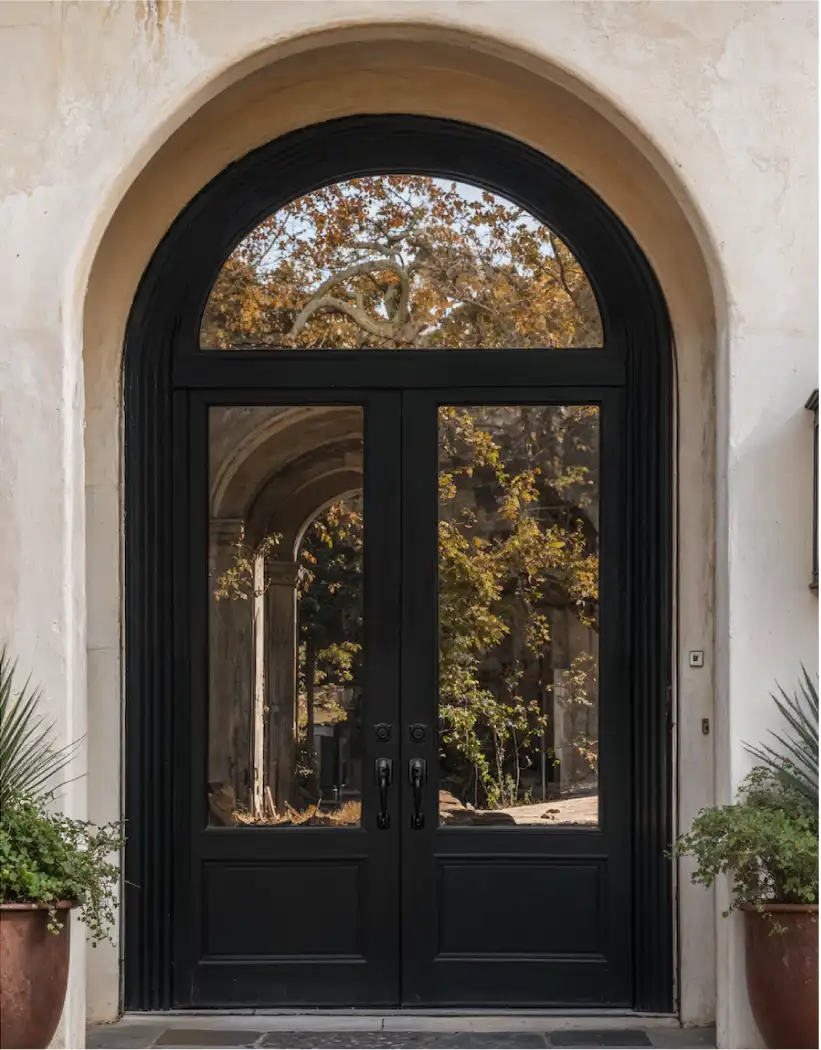
Shape also changes the conversation. An arched entry can use the curve to place more open glass above the most sensitive sightline, while the lower section carries a more private pattern. The site’s arched iron door planning guide shows why the frame, curve, and surrounding architecture need to be designed together. The same principle applies to privacy: the glass should belong to the whole elevation, not be added as an afterthought.
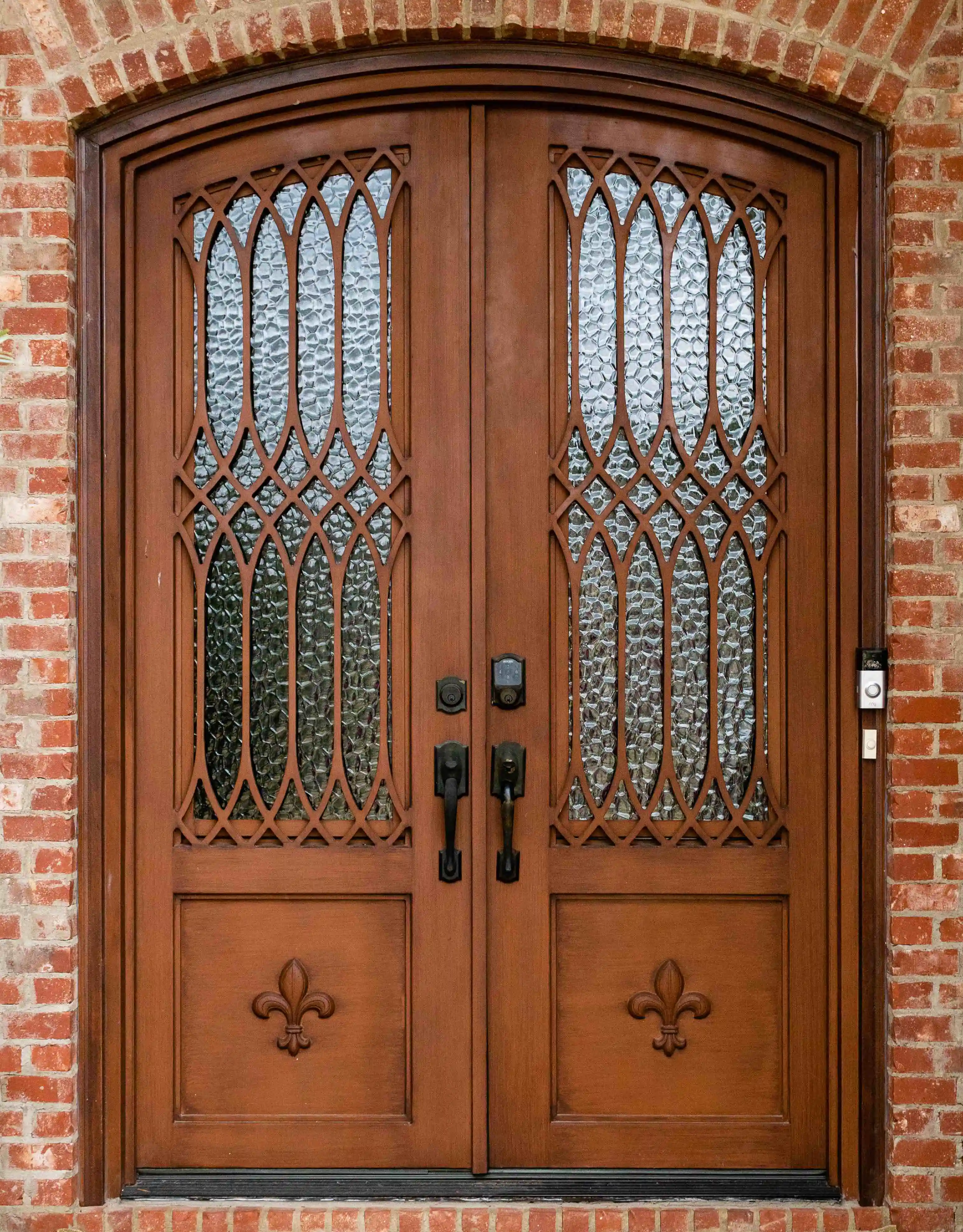
Keep daylight without turning the entry into a display window
Privacy and light do not have to be opposites. The useful question is how the light enters. Textured glass spreads it more evenly, which can make a narrow foyer feel brighter without creating one sharp, exposed view. Divided panes and ironwork can create rhythm and shadow, keeping the entry visually interesting even when the room beyond is not visible. A higher glass area can also pull daylight deeper into the space while leaving lower sightlines more controlled.
Before choosing a heavy privacy treatment, look at how much natural light the entry already receives. A north-facing foyer, deep porch, or interior hall may depend on the front door for brightness. In that case, an opaque-looking glass can make the entry feel dimmer than expected. The U.S. Department of Energy recommends comparing exterior doors as complete systems, including the glazing, frame, and climate. That is practical guidance when the glass area is substantial.
Glass selection also affects the view from inside. A patterned or frosted pane can make daylight feel soft and calm, but it changes the crispness of the outdoor scene. Clear insulated glass is the most open option, while rain or bubble texture keeps a sense of movement without preserving a detailed view. There is no universal winner. The strongest choice is the one that lets the entry feel bright and intentional while protecting the areas of the home that should remain private.
Ways to improve privacy on an existing glass front door
If the door itself is in good condition, a removable approach may be enough. Window film, a light-filtering shade, or a carefully chosen curtain can change the view without replacing the entry. These are reasonable options when the project is mainly about reducing visibility quickly, especially if the homeowner is still deciding on a larger renovation. Check the film manufacturer’s guidance for compatibility with the existing glass assembly before applying anything permanently.
Those fixes have limits. Film can look different from inside and outside, may create edges or bubbles over time, and does not change a door that feels undersized, poorly proportioned, or dated. A shade or curtain brings useful control at night but becomes another object to operate and clean. When the glass is only one part of a larger problem, treating the surface may postpone the real decision rather than solve it.
A replacement project is worth considering when the entry needs a new configuration, better operation, more balanced proportions, a different level of daylight, or a more cohesive relationship to the home’s architecture. Start by recording the opening, glass areas, and sightlines. The guide to measuring a front door for replacement explains the photos and dimensions that make the first conversation more productive. The goal is not to provide final fabrication measurements yourself. It is to make sure the design begins with the conditions that affect privacy and fit.
Match the privacy treatment to the style of the home
Privacy glass has a visual job as well as a practical one. A front door is a close-up detail when someone walks to the house, but it is also part of the composition from the curb. The glass should support the architecture instead of reading like a quick add-on. A simple frosted surface can work well with a smooth modern frame and restrained ironwork. A more traditional facade may call for rain, bubble, seeded, or decorative glass that adds movement and depth without making the entry feel overly formal.
Consider the relationship between the door and the windows closest to it. If the home has large clear windows beside the entry, a fully opaque-looking door can feel disconnected. In that case, a textured glass that keeps some depth may create a more natural transition. If the windows are already covered by shutters, landscaping, or a deeper porch, the entry can take a more private treatment without looking out of place. The material palette matters as well. Brick, stone, painted siding, plaster, and dark steel frames all change how reflective or light-colored glass reads from a distance.
Pattern scale is another quiet but important choice. Small repeated details can make a tall door feel busy, especially when paired with scrollwork or a strong exterior texture. Large-scale panels can feel calm but may create an uninterrupted view into the home when the glass is clear. The best proportions usually repeat something already present in the architecture: a window mullion, the rhythm of a porch column, a horizontal course in the masonry, or the shape of an arch. Browse the project gallery with that question in mind. The most successful entries look like they belong to the house before the door is even opened.
Do not feel pressured to use the same treatment in every pane. A custom entry can place more texture where privacy is needed and use clearer glass where light or a view matters. That may mean a textured sidelight beside a clearer upper transom, or a divided door with more visual density at eye level and a lighter pattern above. The right composition makes these changes feel deliberate rather than pieced together.
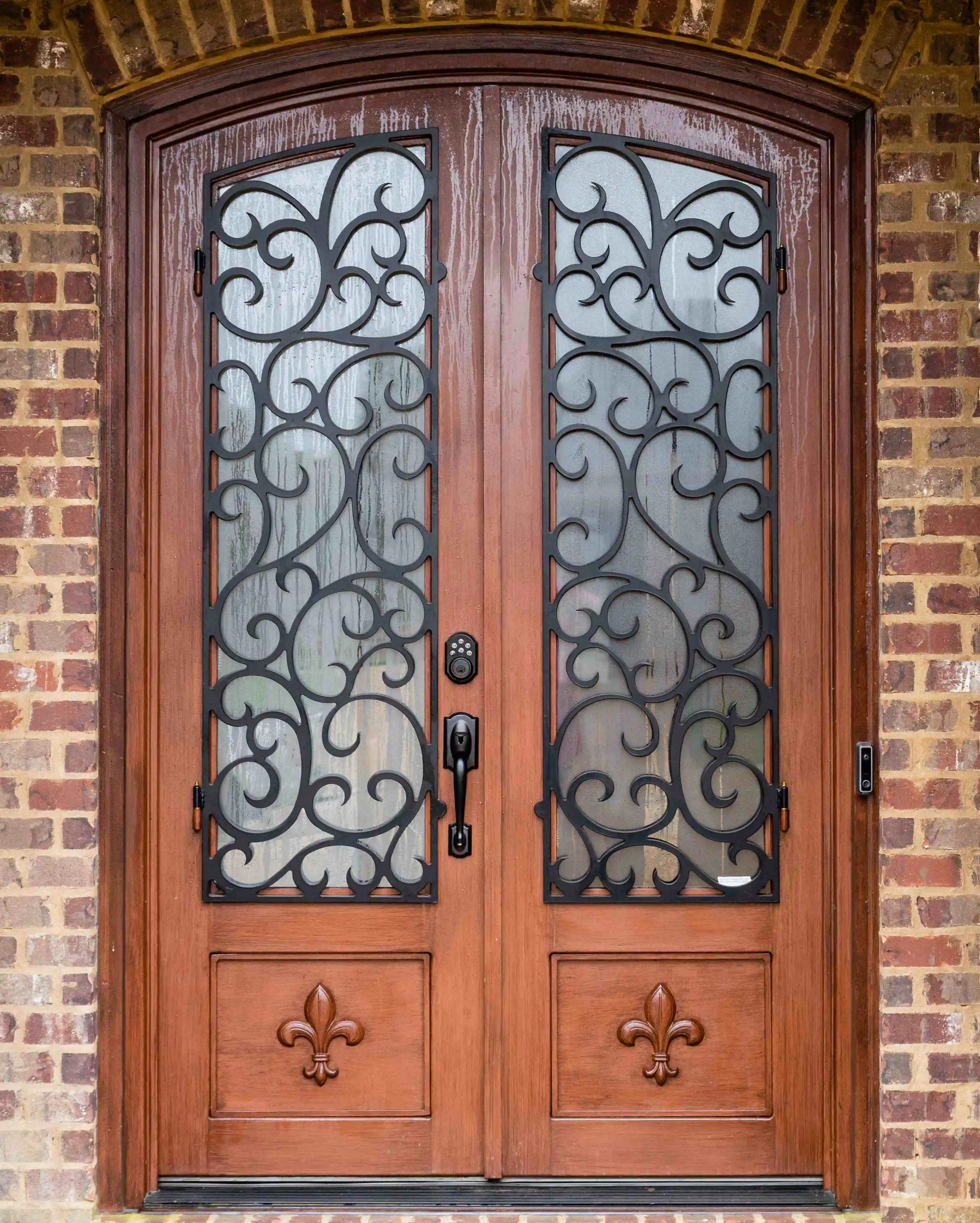
How to review glass samples before you commit
A glass sample is useful, but it is not the finished entry. Ask to see it at more than one distance and against a real source of light. Hold it near a window or exterior door, then step back. Look through it from the side as well as straight on. Some textures are more private at a direct angle and more transparent at an angle. Others change character when sunlight passes through them. A small square can tell you about texture. It cannot fully show how a large pane will change the foyer.
When possible, bring a photo of the front elevation and a photo taken from inside the entry. The goal is not to mock up the entire project perfectly. It is to make sure the sample is being considered beside the colors, materials, and proportion of the actual home. If a new door will include sidelights or a transom, mark their approximate size on the photo. A treatment that feels balanced on a narrow door insert may feel too dense across a broad wall of glass.
Review the sample in both warm and cool light. Daylight can make frosted and textured glass feel soft, while warm indoor lighting can show how the same surface carries a silhouette at night. This is also the moment to decide how much view you want from the inside. Some homeowners care most about privacy from the street. Others want to see a delivery, a guest, or weather on the front walk without opening the door. Those are different priorities, and the glass should not force you to choose one blindly.
Ask practical questions at the same time. How will the glass be cleaned? Does the pattern collect dust at a level where it will be noticed? Will nearby hardware, a screen door, or a wreath hanger cast a distracting shadow across the pane? Is the treatment consistent with the glass package chosen for the project? These questions sound small, but the front door is used every day. A good decision should work on a quiet weekday morning as well as it does in a showroom.
How to choose the right front door privacy glass
Once you have looked at the sightlines, narrow the decision with a few practical questions. What needs to be obscured from the porch or street? What light does the foyer need? How does the glass look from the curb, at the threshold, and from inside? Is the privacy concern strongest during the day, at night, or both? And does the glass need to coordinate with sidelights, a transom, adjacent windows, or ironwork?
- Identify the sensitive view. Stand outside at the normal visitor position and decide whether the concern is a direct view, interior movement, or a feeling of exposure near the door.
- Test day and night conditions. Compare samples or similar glass when exterior and interior light levels differ. Do not select a treatment based only on a daytime showroom impression.
- Choose the right level of distortion. Frosted glass creates a uniform soft view, while rain, bubble, and other textures retain more movement and character. Divided patterns can break up the view without fully obscuring it.
- Review the complete opening. Include sidelights, transoms, and nearby clear windows. A private door panel can be undermined by an overlooked pane beside it.
- Compare the complete door system. Ask about the glass assembly, weatherstripping, threshold, frame, and installation. The visible pane is one part of how the entry will feel and perform.
Planning a custom entry
Bring the sightlines, and shape the glass around the home.
Luxury Iron Doors helps homeowners coordinate door configuration, glass, finish, and installation details around the actual entry. Explore custom wrought iron doors, review glass and design options, or share your project for a tailored conversation.
Request a quoteFrequently asked questions
Can you see through frosted glass in a front door?+
Frosted glass softens outlines and light, but the amount of privacy depends on the glass treatment, the lighting on each side of the door, and how close someone stands to the pane. Review a full-size sample when possible, especially for a door close to a sidewalk or porch.
What is the best glass for a front door with privacy?+
There is no single best choice for every entry. Frosted, rain, and textured glass can all work well. The right selection depends on whether the priority is obscuring direct views, keeping daylight, matching the architecture, or making the glass easy to live with.
Do sidelights need privacy glass?+
Not always. Sidelights can be clear, textured, partially obscured, or paired with a door that carries more privacy. Look at the whole opening from the street and from inside the foyer before treating every pane the same way.
Can I add privacy to an existing glass front door?+
Sometimes. A removable treatment or window film can be a short-term answer, but it changes the appearance only. If the glass, frame, door operation, or overall proportions need attention, a complete entry project gives more room to solve privacy, light, and design together.