
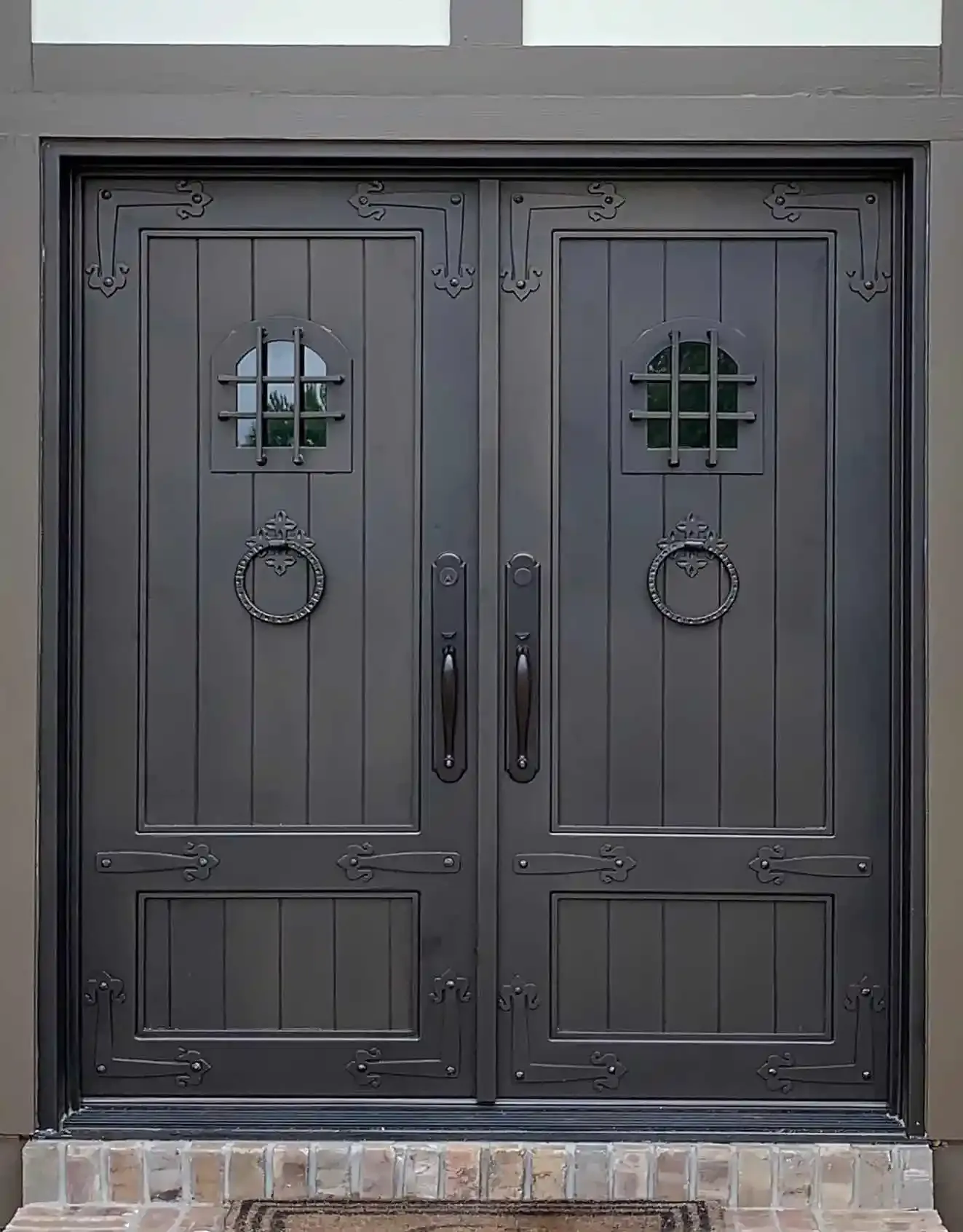
The best material for a front door is the one that fits the house, the climate, and your expectations after the first season has passed. A door is part weather barrier, part security boundary, and part of the architecture people notice first. That is why the answer is not simply wood, fiberglass, steel, or iron. Each can be the right choice, but each asks something different of the homeowner.
Start by separating what matters most. Some homes need a stable, low-maintenance replacement at a standard opening. Others need a larger entry, more glass, a particular arch, or a door that carries the same visual language as the windows and railings. Once those priorities are clear, material becomes an informed decision instead of a guess based on a showroom sample.
What matters when comparing front door materials
A front door has to work as a complete system. The slab gets the attention, but the frame, glass, sill, weatherstripping, hardware preparation, and installation determine much of the day-to-day result. The ENERGY STAR exterior-door guidance makes the same point in practical terms: performance ratings apply to the whole door unit, not just the material you can see from the curb.
For most homeowners, five questions do the useful sorting. How exposed is the opening to rain, sun, humidity, and temperature swings? How much ongoing care is realistic? Is the goal a straightforward replacement or a custom architectural feature? How much glass is wanted, and what privacy or thermal performance should it provide? Finally, does the door need to coordinate with existing exterior materials, interior sightlines, or other steel and ironwork?
Price still matters, of course, but it should be considered alongside lifecycle cost. A lower initial price can make sense for a simple, protected opening. In a highly visible or exposed location, the better value may be the material and construction that keep their proportions, finish, and operation over time. The right choice is the one you will not have to explain away every time you walk up to the house.
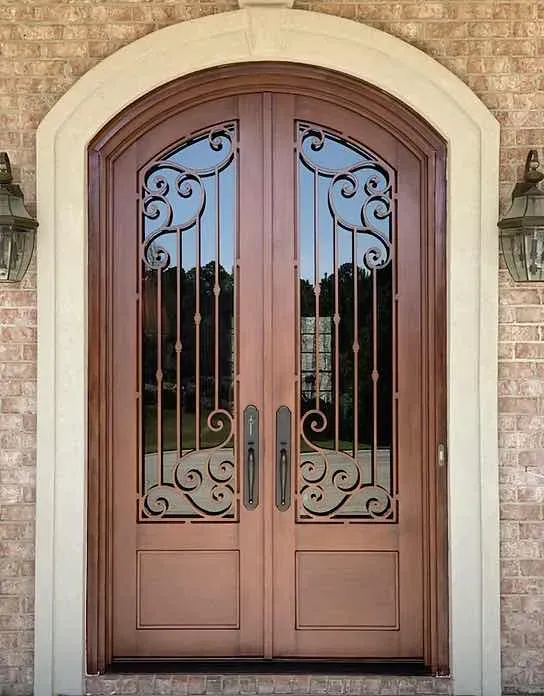
Wood front doors: character with a maintenance commitment
Wood remains the material people choose when they want warmth, grain, and a finish that feels naturally tied to the home. It works especially well with traditional architecture, historic details, and interiors where a stained entry can create a strong visual connection to millwork or flooring. It can also be repaired, refinished, and customized in ways that appeal to homeowners who value material character.
The tradeoff is movement and maintenance. Wood responds to moisture and sunlight. A covered porch and a well-managed overhang are helpful. An exposed west-facing entry, driving rain, or a humid climate place more demands on the finish and on the construction. Even a well-made wood door benefits from regular inspection for failed finish, swelling, checking, or edges that are beginning to absorb moisture.
That does not make wood a poor choice. It means the door needs to be matched honestly to the setting. If the entry is protected and the goal is a rich natural finish, wood can be compelling. If the opening receives hard weather and maintenance needs to be minimal, another material may create less work and more consistency. The U.S. Department of Energy's overview of efficient doors is a good reminder to compare the performance of the full assembly, including glazing and seals, rather than treating a species of wood as the entire energy story.
Fiberglass front doors: practical, stable, and low maintenance
Fiberglass is a common choice for homeowners who want a durable door with less upkeep than wood. It is available in smooth painted finishes and wood-grain textures, and it can be a practical fit for standard-size replacements. Fiberglass does not react to humidity in the same way wood does, which helps it hold a consistent appearance in many climates.
Its strongest case is convenience. If the project calls for a dependable door at a familiar size, with limited exposure to harsh weather and a preference for periodic cleaning over refinishing, fiberglass is easy to understand. Many products also offer insulating cores and factory-applied finishes, though those features vary substantially by manufacturer and product line.
The limitation is that fiberglass has a ceiling in proportion, surface depth, and customization. It can imitate wood convincingly from a distance, but it does not bring the same material depth at close range. It is also less suited to very large openings, delicate sightlines, unusual shapes, or a design that depends on broad panes of glass and slim structural profiles. For an entry that is meant to read as a custom architectural element rather than a replacement part, fiberglass may solve the functional need without fully solving the design brief.
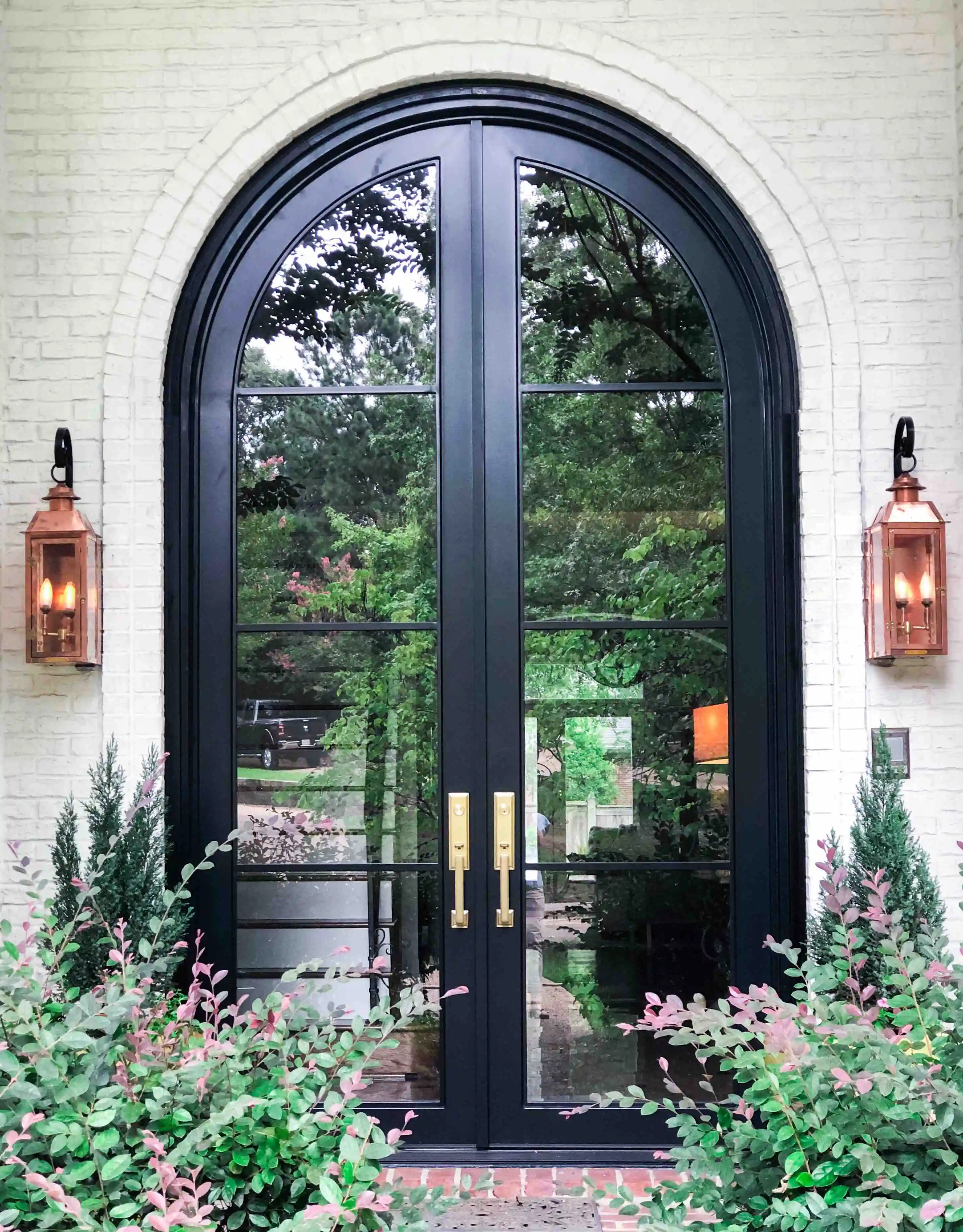
Steel front doors: strength and value, with finish details that matter
Steel doors are often selected for their strength, crisp painted finish, and value. They can be a good solution for a straightforward exterior opening, particularly when the design calls for a smooth surface and the project does not need extensive customization. They also give buyers a wide range of product choices across common sizes and configurations.
Because steel is metal, finish quality and installation details deserve attention. A chip, damaged edge, or persistent moisture at the sill should be addressed promptly, especially in wet or coastal environments. Good drainage, complete weatherstripping, and protection from standing water are not decorative details. They are part of keeping the entry operating and looking the way it should.
Energy performance is another place to compare specifications instead of making assumptions. The National Fenestration Rating Council explains how to read door energy labels, including measures such as U-factor and solar heat gain. Those values are more useful than a broad claim that one material is automatically more efficient than another. Compare the actual unit, then consider the climate and the amount of glass in the design.
A standard steel door is not the same thing as a custom iron door. They share a family resemblance, but the design possibilities, construction approach, glass proportion, and visual weight are different. When homeowners say they want a steel look, it is worth asking whether they mean a painted insulated door or a purpose-built architectural metal entry. The answer changes the project.
Iron front doors: made for custom openings and architectural presence
Iron is the right conversation when the door needs to do more than close an opening. It is especially suited to larger entries, double doors, arched tops, sidelights, transoms, custom glass layouts, and homes where the entry needs to hold its own beside stone, brick, stucco, or substantial millwork. The strength of the material allows for glass and frame proportions that feel more architectural than a typical replacement door.
With an iron entry, the design process matters. The opening is measured, the door is configured, and decisions about glass, swing, finish, hardware preparation, threshold, and sightlines are made together. That makes it a different purchase from selecting a standard slab. It also means the finished door can respond to the actual house rather than forcing the house to accept a standard size or style.
Iron is not maintenance-free, and a credible project should not pretend otherwise. Exterior finishes should be suited to the location, chips should be touched up, weatherstripping should be checked, and the sill should drain correctly. In exchange, the homeowner gets a material with real visual depth, a solid feel in operation, and the ability to tailor the entry around a design idea. In a protected or properly detailed exterior location, that trade can make excellent sense for a long-term home.
Glass choices deserve the same attention as the frame. Clear insulated glass may be right when light and openness are the priorities. Frosted, rain, tinted, or textured glass can increase privacy while keeping the entry bright. The Department of Energy's weatherstripping guidance is useful here because it reinforces a simple truth: air sealing and fit are part of comfort, whatever material surrounds the glass.
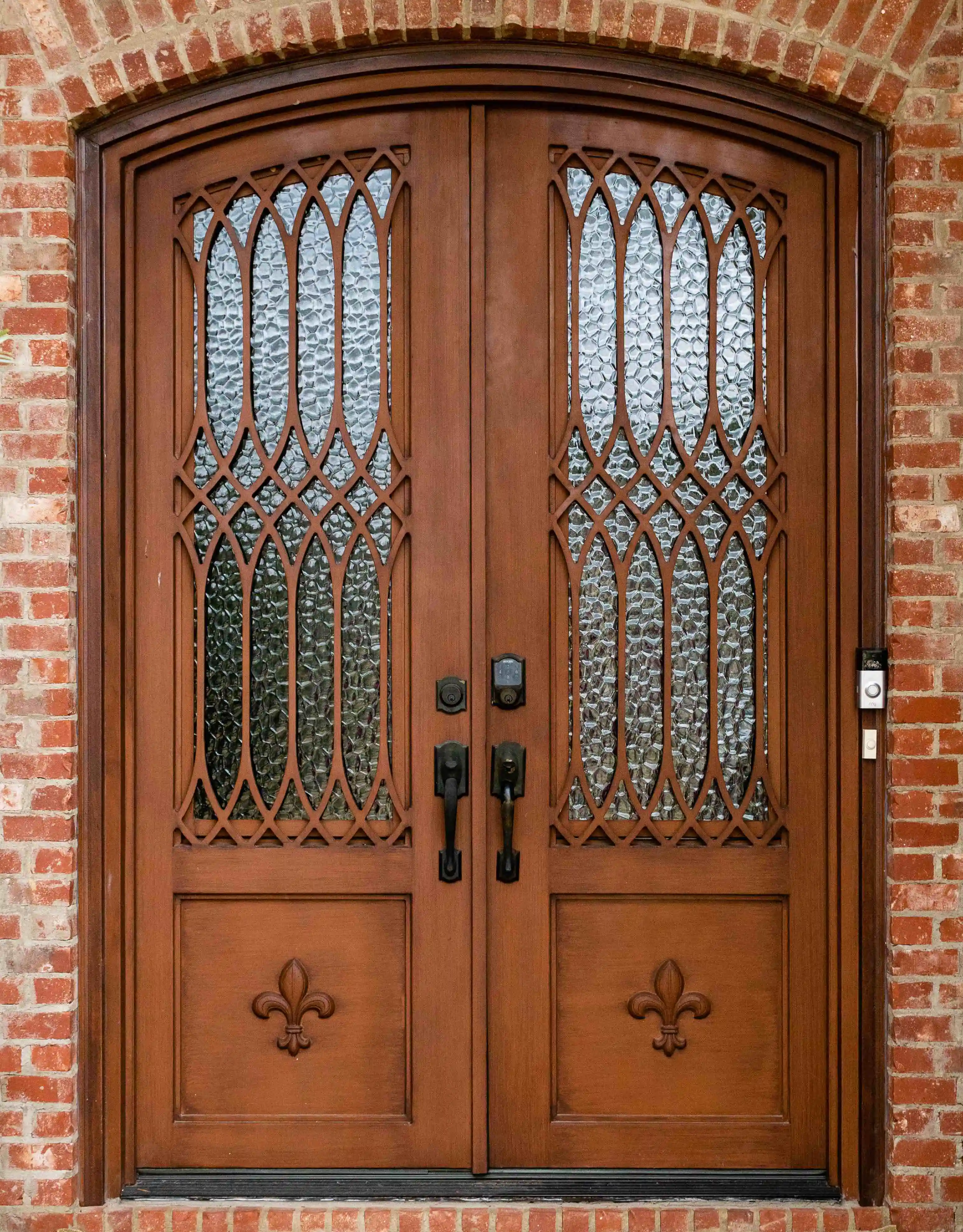
How glass changes the material decision
It is easy to compare doors as if each were a solid panel. In practice, many front doors include sidelights, transoms, or large panes of decorative glass. Once glass becomes a major part of the design, the frame material is only one piece of the performance and privacy decision.
Ask where the sun hits the opening, whether the house needs privacy from the street, and how much natural light the foyer can take without feeling exposed. Then compare glazing options, not just frame samples. Low-emissivity coatings, insulated glass, and the rating of the complete assembly can all matter. The ENERGY STAR product guidance and NFRC labels give homeowners a neutral place to understand the numbers before comparing product quotes.
Design also matters. A narrow divided-light pattern creates a different feeling from a single uninterrupted pane. A double door can become lighter or heavier depending on how the glass is divided. With iron, those decisions can be tailored rather than limited to a short list of stock layouts. With fiberglass or standard steel, the available glass packages may drive the design more than the architecture does.
Climate, exposure, and the front-door location
The same door can have an easy life on a deep covered porch and a hard life on an exposed facade. Before choosing a material, stand outside the existing entry at different times of day. Notice direct sun, wind-driven rain, water that collects near the threshold, and whether the opening gets damp after a storm. Those observations are often more useful than a broad material recommendation.
For wood, sun and moisture shape the maintenance plan. For steel and iron, finish care and drainage become especially important. For fiberglass, heat, hardware, and the quality of the surrounding frame still matter even when the surface is low maintenance. The goal is not to eliminate upkeep. It is to choose a level of upkeep that matches the home and the owner.
Cold, hot, and mixed climates add another layer. Ask for performance information on the actual door configuration, including the glass. The Department of Energy recommends looking at ratings appropriate to your climate, which is sound advice for any major exterior opening. A beautiful door that is poorly matched to the sun, air sealing, or threshold detail will not feel luxurious for long.
How to choose the best material for your front door
Use this short decision guide to move from broad preference to a practical shortlist.
- Begin with the opening. Measure the width, height, depth, and condition of the surrounding wall. Note any arch, transom, sidelight, or uneven existing condition that needs to be resolved.
- Define the visual job. Decide whether the door should blend into the facade, create warmth, bring in light, add security, or become the focal point of the entry. One material cannot be best at every job.
- Be realistic about maintenance. A beautiful wood finish needs periodic attention. Metal finishes need care after damage. A low-maintenance product still needs clean seals, working hardware, and a dry threshold.
- Compare complete systems. Review the frame, glass, threshold, weatherstripping, energy labels, warranty, and installation scope. A door is only as good as the system around it.
- Choose the material that supports the design. Fiberglass and standard steel work well for many replacement projects. Wood brings natural character. Iron becomes compelling when the entry needs custom scale, glass, shape, or architectural presence.
For a homeowner replacing a standard door under a covered porch, fiberglass or steel may be the sensible answer. For a restoration with a protected entry and a commitment to finish care, wood may be the right answer. For a home where the entry needs to be measured, designed, and built around the architecture, iron creates room for a different result.
Planning a custom entry
Start with the house, then shape the door around it.
Luxury Iron Doors works from the opening, references, and priorities of the project. Explore custom entry doors, see the available door collection, or review custom options before requesting a quote.
Request a quoteFrequently asked questions
What is the best material for a front door?+
The best material depends on the home, climate, maintenance tolerance, security needs, and desired look. Fiberglass is often a practical low-maintenance choice, wood suits homes where natural character is the priority, steel can be a strong value choice, and iron is a strong fit for a custom architectural entry.
Are iron front doors energy efficient?+
An iron door can perform well when its glass package, weatherstripping, thermal details, threshold, and installation are designed for the climate. Compare the actual door system's energy labels and specifications rather than judging performance by frame material alone.
Do steel front doors rust?+
Steel can corrode if its finish is damaged and moisture reaches exposed metal. Use a suitable finish, address chips promptly, maintain drainage around the opening, and follow the maker's care guidance.
Is fiberglass better than wood for a front door?+
Fiberglass is usually the easier choice when low maintenance and stability are more important than the natural depth of a real wood finish. Wood can be the stronger choice when the architecture calls for it and the opening is protected enough to support regular finish care.