Front door curb appeal is less about finding a dramatic door and more about giving the entrance a clear job in the composition of the home. From the street, the entry should feel easy to find. At the threshold, it should feel proportionate, welcoming, and made for the way the house is used.
That does not require every project to become a full exterior renovation. Sometimes the right move is careful maintenance, better lighting, or a finish that gives an existing door more definition. Sometimes the opening itself needs a different scale, glass arrangement, or configuration. The useful first step is to look at the facade as a complete picture, then decide what the front door needs to contribute.
Start with the facade, not the door catalog
Stand at the curb and ask where the eye lands first. Is the entry clearly visible, or does it disappear under a deep porch, beside a garage, or against a dark wall? Does the facade already have a strong roofline, stone surround, tall windows, or formal columns? These elements determine whether the door should be a quiet anchor or a more visible focal point.
Then walk toward the house. Notice the path, steps, lighting, railings, landscaping, and amount of shelter around the opening. This Old House’s curb-appeal guidance makes a sound point: the entry works best as part of the whole composition, with proportion and weather protection considered alongside appearance. A beautiful door can still feel misplaced when the approach and opening have not been considered together.
Give the existing door an honest assessment before deciding it must be replaced. A sound door may benefit most from cleaning, repair, a new finish, or better surrounding details. An opening with poor proportion, failed glazing, persistent drafts, or a door that no longer operates correctly deserves a more complete conversation. This distinction keeps the project focused on the real problem rather than a generic upgrade list.
Take a few photos from the curb, the sidewalk, and the porch. A wide view reveals visual balance. A close view reveals the condition of trim, threshold, hardware, and glass. Those images are much more useful when comparing directions than an isolated product photo, because they show what the door actually has to work with.
Give the entry the right proportion
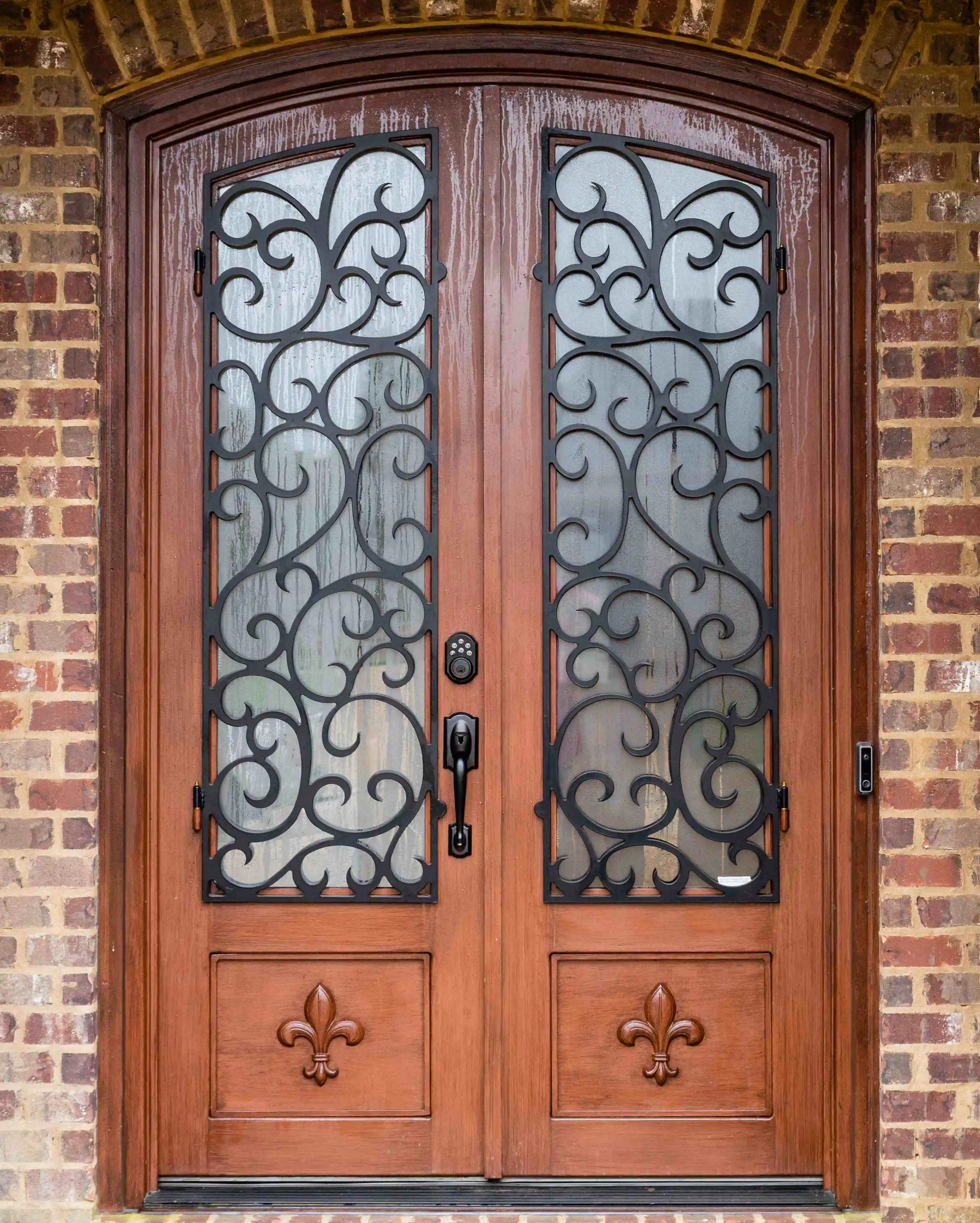
Proportion is often the difference between an entry that feels finished and one that feels like an afterthought. A small single door centered in a wide opening can look timid. A heavily ornamented double door can overwhelm a compact facade. The right answer begins with the opening, the wall around it, and the visual scale of nearby windows, rooflines, and masonry.
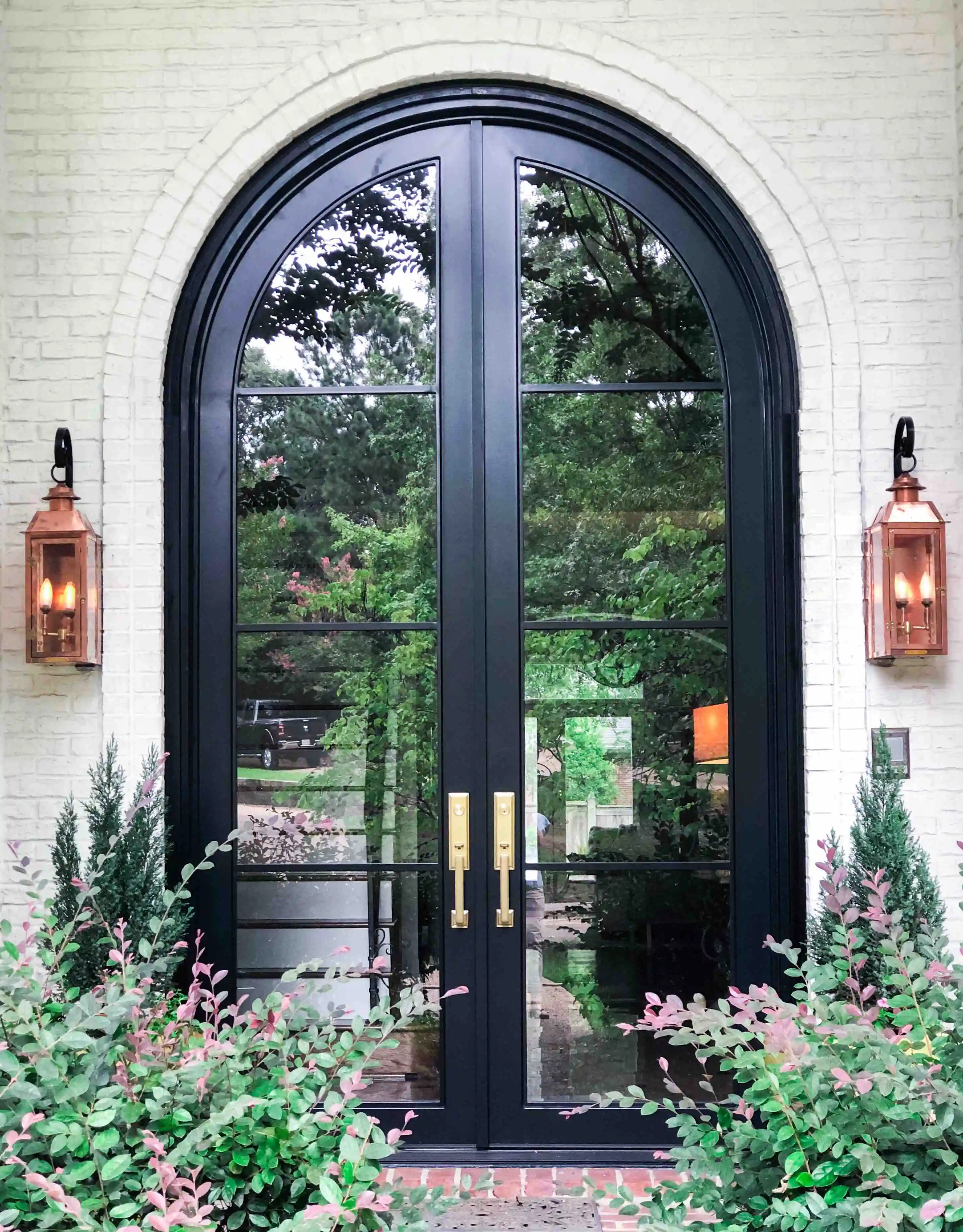
For a tall or wide entry, double doors, sidelights, or a transom can create a more settled composition. Each adds daylight and presence, but each also changes privacy and maintenance needs. A simpler opening may be better served by a carefully proportioned single door and strong hardware rather than extra decorative parts. The point is not to make the entry as elaborate as possible. It is to give the facade one clear, believable center.
Look at the vertical and horizontal relationships, not only the door’s overall size. The top of the door may want to relate to nearby window heads, an arch in the masonry, or the underside of a porch roof. The side margins should feel deliberate rather than squeezed by trim or left floating inside an oversized surround. A custom configuration gives room to solve those relationships, but the design still needs restraint. More glass or more ironwork only helps when it makes the opening feel more resolved.
Look at the door from inside as well. The frame, glass divisions, and swing affect the foyer just as much as the exterior. Before choosing a configuration, use the front door measurement guide to record the opening, threshold, swing, surrounding trim, and conditions that shape what can be built well.
Let the door share the home’s architectural language
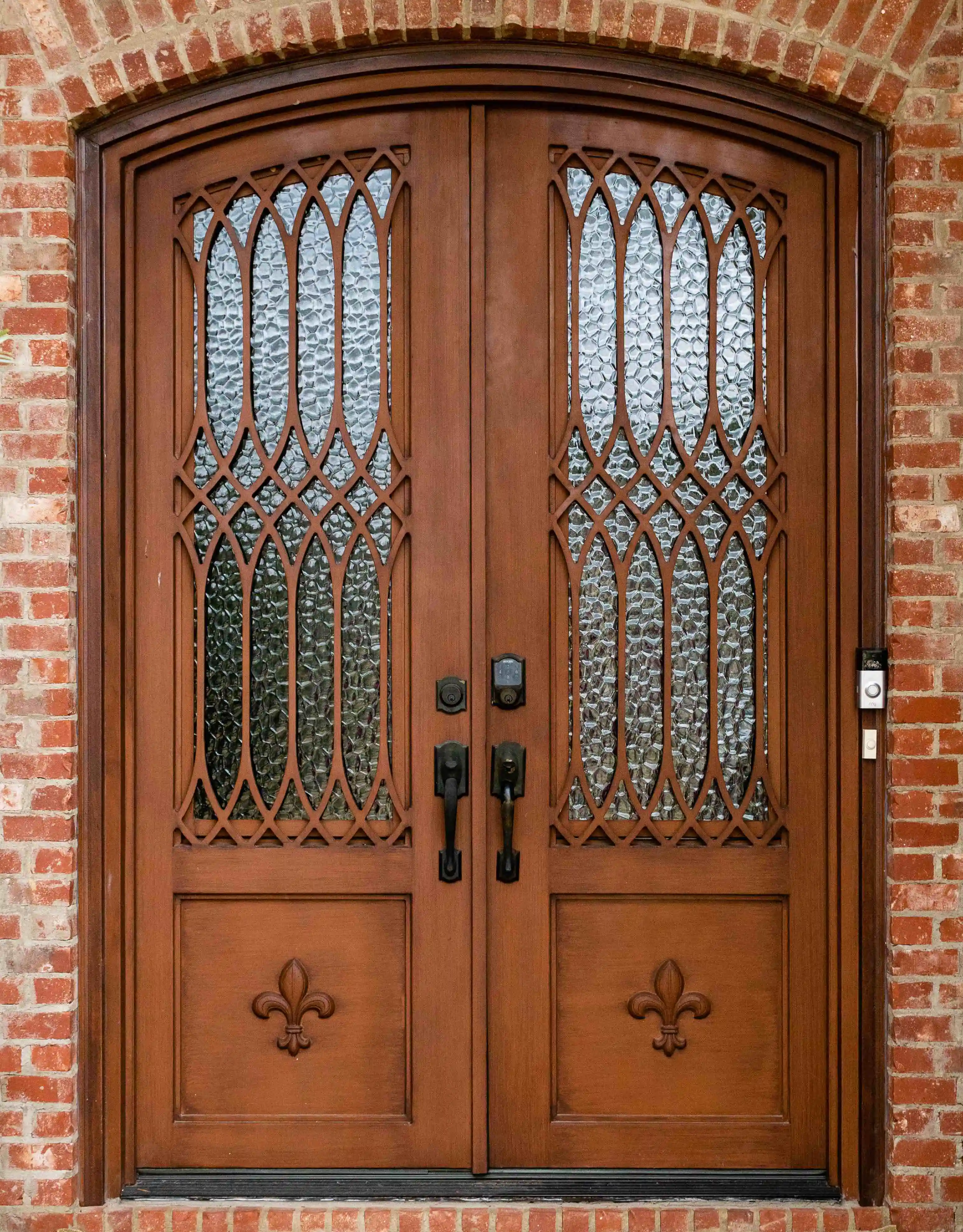
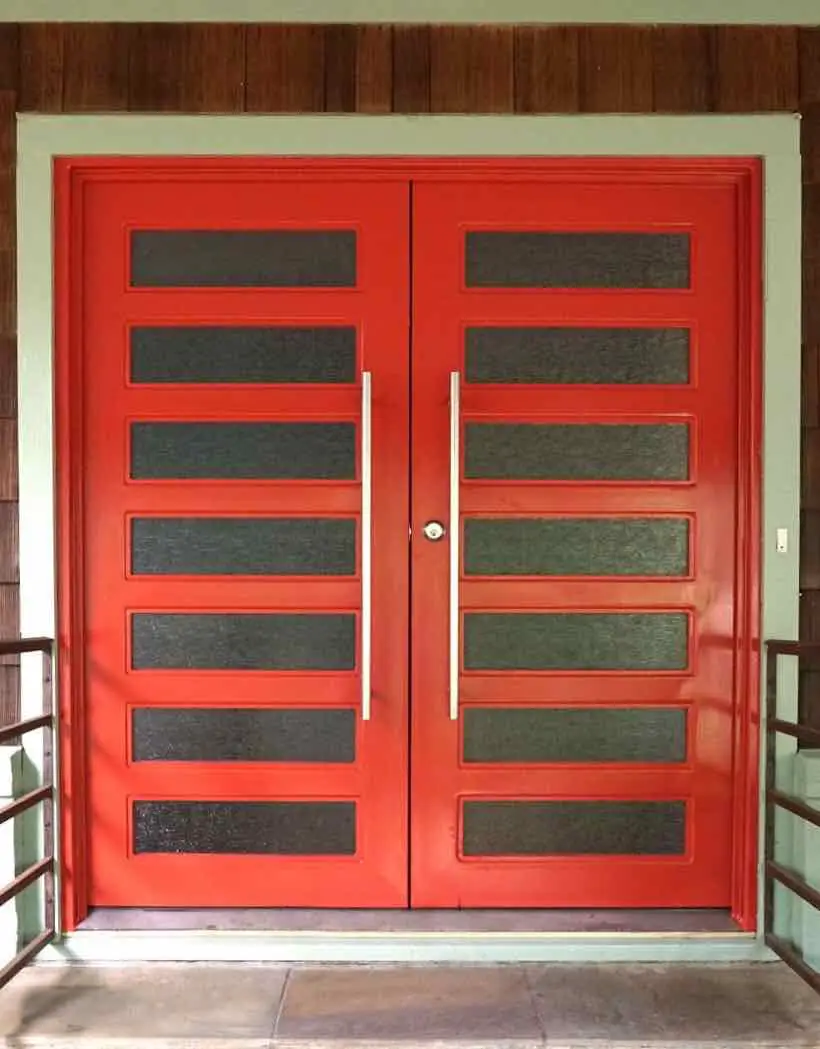
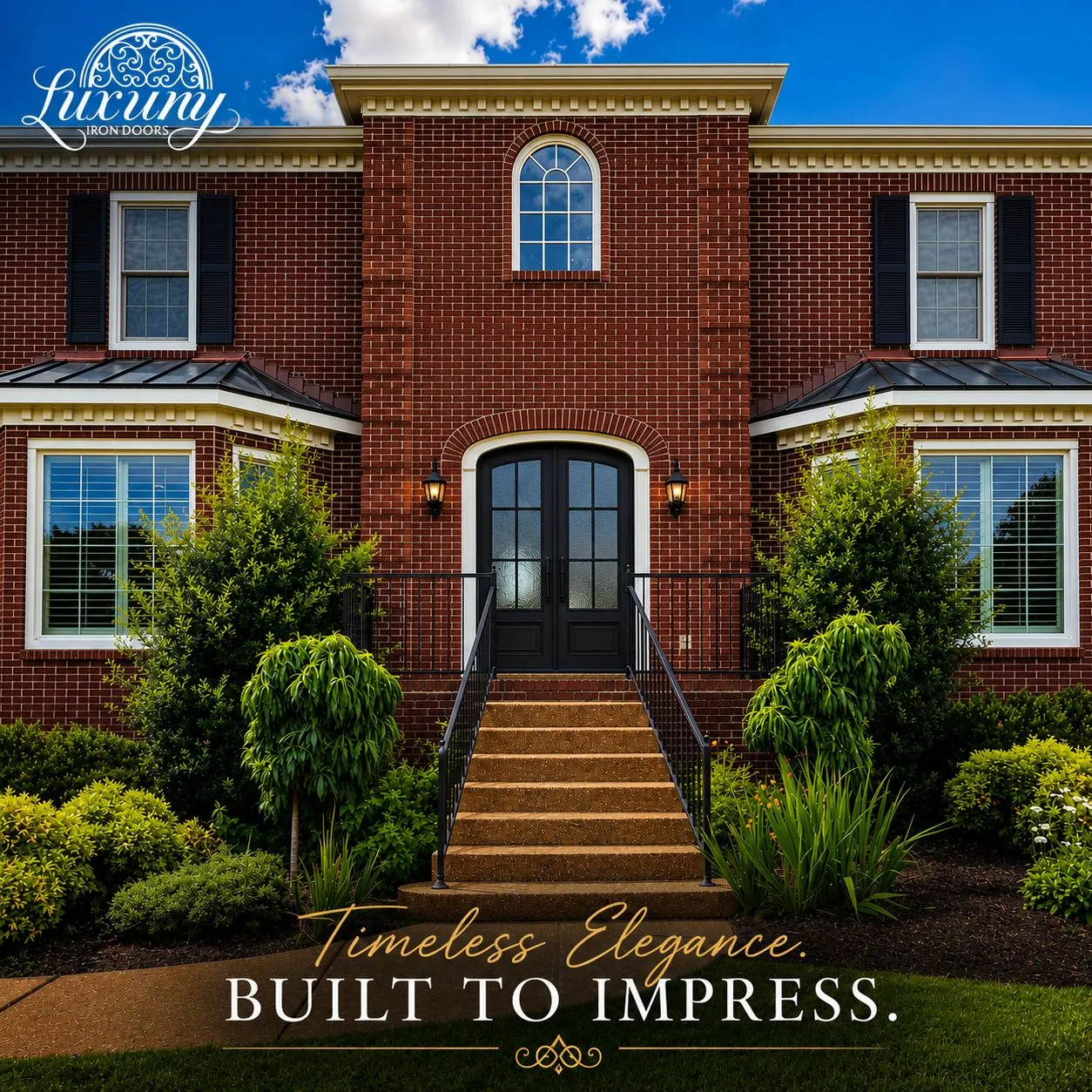
A door does not need to imitate every nearby detail, but it should speak the same visual language. A traditional brick home can carry divided glass, an arch, or more expressive ironwork. A restrained contemporary facade usually suits cleaner lines, more uninterrupted glass, and simpler hardware. A home with heavy stone, timber, or historic detailing may need warmth and material depth rather than a glossy, high-contrast finish.
Use the house to set the level of detail. A facade that already has elaborate masonry, columns, and ornament often benefits from a calmer door. A plain elevation can handle a stronger silhouette, richer finish, or larger glass area. This is why one design can look excellent on one house and conspicuously wrong on another, even when the door itself is well made.
When comparing options, include the material and function in the decision. A door is not just a front-facing panel. Its glazing, seals, frame, threshold, and installation all shape how it performs. The National Fenestration Rating Council’s guide to energy-performance labels explains why it is worth comparing the actual door system, especially when glass is a major part of the design.
Use glass, light, and privacy with intention
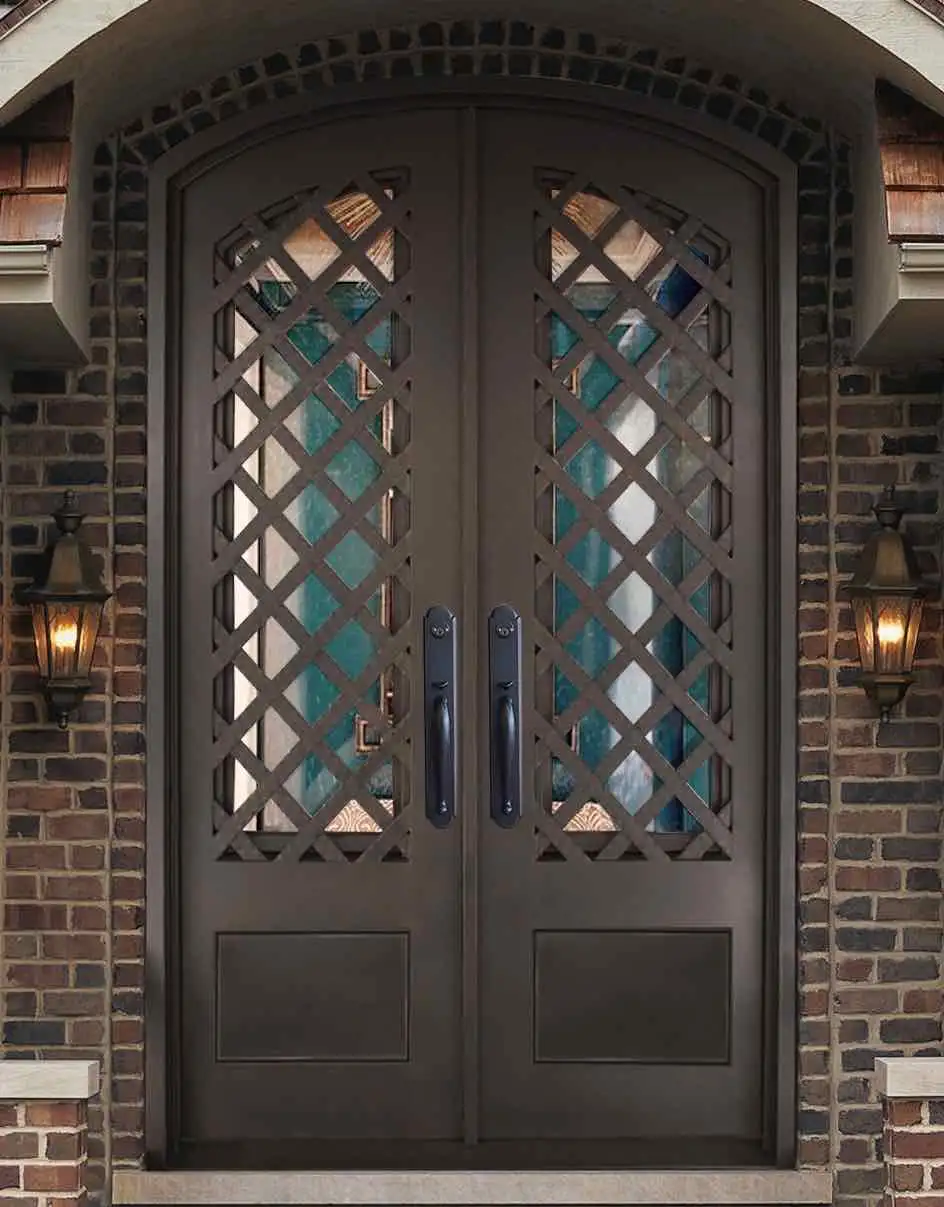
Glass can make an entry feel larger and more connected to daylight, but it should never be added as a decorative reflex. First consider what the glass will reveal from the street, how direct sun hits the opening, and how the foyer feels after dark. Clear glass can be beautiful where privacy is naturally protected. Rain, frosted, tinted, or textured glass can soften sightlines while still allowing light through.
Daylight changes the feeling of a foyer and can change how the exterior reads as well. A tall clear-glass entry may reflect sky and landscaping from outside, then bring a brighter, more open feeling to the interior. In a more exposed setting, privacy glass can keep that benefit while making a direct view less immediate. This is also a performance decision, not only an appearance decision. The ENERGY STAR guide to windows, doors, and skylights is a useful starting point for discussing a complete product’s glass and energy information with a supplier.
Lighting also has a practical and visual role. At night, the entry should be easy to identify without turning the porch into a stage set. Well-scaled fixtures help people approach the door comfortably and make the hardware, house number, and door profile legible. The most convincing result comes from a lighting scale that relates to the door and facade, not from adding more fixtures than the architecture can carry.
For a custom iron entry, glass, finish, and configuration should be considered at the same time. The front door glass privacy guide can help narrow the conversation before the final pattern and glass treatment are selected.
Make the supporting details work together
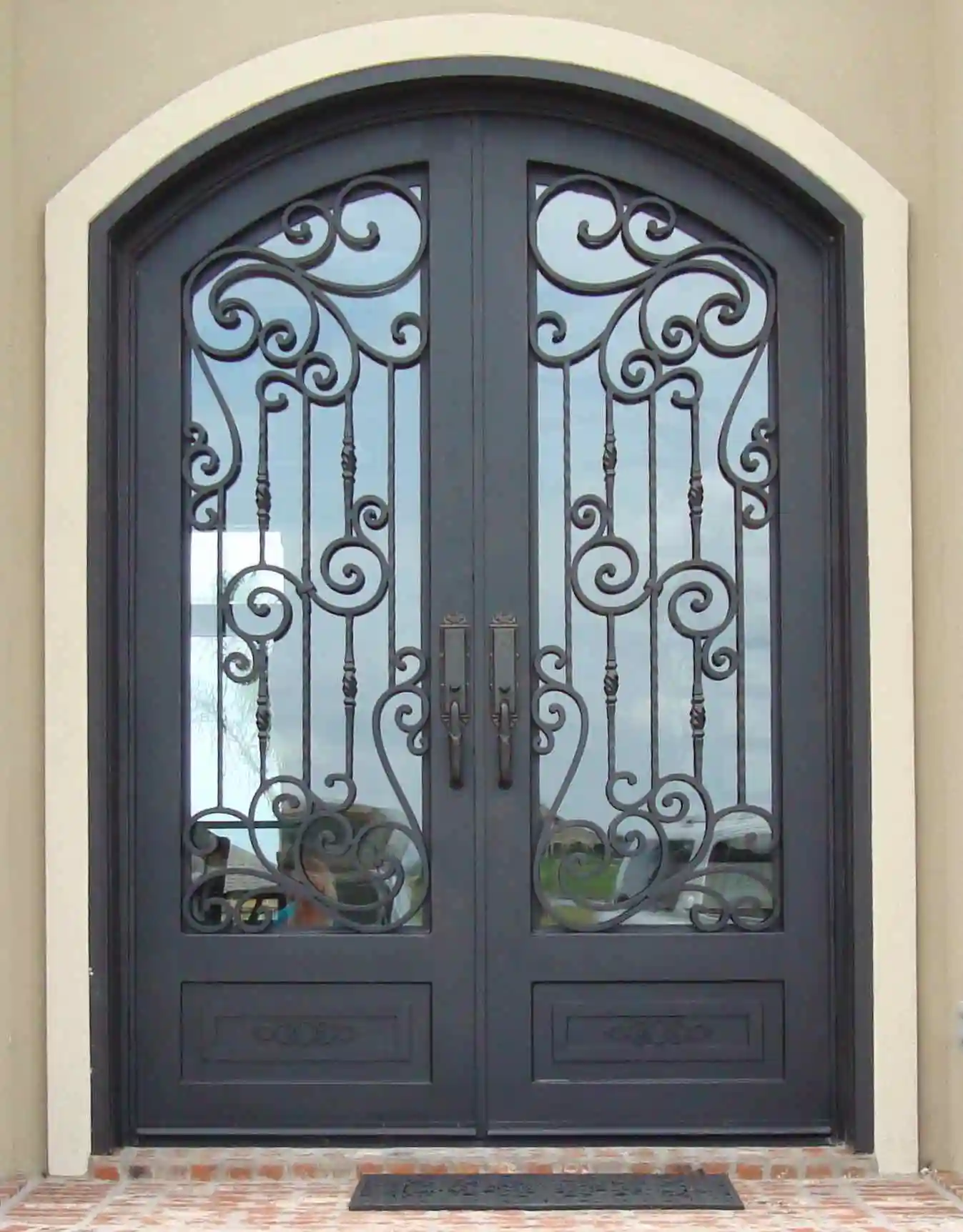
Hardware, house numbers, lighting, planters, railings, and the threshold do more than decorate the front porch. They tell the eye how to read the entry. When their finishes, scale, and placement relate to the door, the facade feels complete. When they all ask for attention at once, the entrance feels busy no matter how good the door is.
Start with the practical details. Replace corroded or poorly functioning hardware. Clear debris from the threshold. Repair peeling trim. Check that a gutter or sprinkler is not repeatedly soaking the jamb. Then choose a short list of additions that support the entry rather than competing with it. Architectural Digest’s porch ideas similarly emphasizes scale in lighting and planters, both of which can strengthen an approach when they fit the size of the elevation.
Keep the approach clear enough for the door to be seen. Shrubs that cover a low sidelight, a planter that blocks a step, or a large wreath that hides the best part of the glass all weaken the visual line to the entry. A restrained pair of planters, a clean path, and a properly sized light can do more than several small accents scattered across the porch. The supporting details should frame the arrival, not create a second focal point beside it.
Color belongs in this conversation too. A dark finish can anchor light siding. A warm bronze or brown can connect to brick and stone. A bolder color can work when the architecture has room for a clear focal point. Use the front door color guide to test a short list against the actual exterior in changing light before making the final choice.
A practical front door curb appeal plan
Break the project into a clear sequence instead of trying to solve every exterior decision at once.
- Photograph the house from three distances. Capture the curb view, the approach, and the threshold in daylight. Include the door open from inside if swing and foyer light are important.
- List what is fixed and what is failing. Note the roof, masonry, windows, porch, and driveway that will remain, then identify any worn finish, draft, sticking hardware, drainage issue, or aging glass.
- Decide what the entry needs to do. Choose whether the priority is more scale, daylight, privacy, a better focal point, a more current profile, or a complete custom composition.
- Compare the complete entry. Review door form, glass, finish, hardware, threshold, lighting, and installation as connected decisions instead of selecting them one by one.
- Use the house as the measure of success. The strongest result looks like it belongs to the architecture, works comfortably every day, and still feels intentional up close.
Do not use curb appeal as a promise about resale value or a reason to choose a door that does not suit daily life. The more durable goal is an entry that feels coherent, protects the opening, and remains enjoyable when you come home at the end of the day. Good proportions and thoughtful maintenance are more persuasive than a one-season makeover.
Luxury Iron Doors helps homeowners, builders, and designers move from the existing opening to a complete entry, coordinating configuration, glass, finish, fabrication, delivery, and installation. Explore custom wrought iron doors, browse the door collection, or see how complete entries change a facade in the project gallery.
Plan the whole arrival
Start with the home, then shape the entry around it.
Share exterior photos, starting dimensions, and the details you want the entry to carry. Luxury Iron Doors can help turn that direction into a considered door and installation plan.
Request a quoteFrequently asked questions
What makes a front door improve curb appeal?+
A front door improves curb appeal when its size, style, color, glass, hardware, and surrounding details work with the architecture instead of competing with it. The result should make the entrance easy to recognize from the street and satisfying to approach.
Should a front door match the windows?+
It does not need to match exactly. Repeating a related line, finish, or level of visual weight is usually more convincing than trying to duplicate every detail. The entry and windows should look as if they were selected for the same home.
Do sidelights make a front entry look better?+
They can. Sidelights bring daylight and width to an entry, but they need to suit the opening, privacy needs, and facade proportions. A narrow or heavily detailed house may need a more restrained arrangement than a broad, formal elevation.
Can a new front door help an older home look more current?+
Yes, provided the door respects the home’s underlying character. Better proportion, clearer glass, an appropriate finish, and updated hardware can refresh an entry without making the rest of the facade feel dated or mismatched.