Yes, wrought iron can rust. That does not make it a poor choice for an exterior entry. It means the door should be treated as a complete exterior system, with a protective finish, clear drainage, working seals, and sensible care when weather or daily use damages the coating.
For a homeowner, the useful question is not whether an iron door will ever encounter moisture. It will. The question is whether moisture can stay against exposed metal long enough to cause trouble. A small chip caught early is usually a maintenance task. Spreading corrosion, a wet threshold, or a door that no longer closes cleanly calls for a closer look at the underlying condition.
Why wrought iron rusts outdoors
Rust is a form of corrosion that affects iron and iron-based materials. Moisture and oxygen are the central ingredients, while salt, pollutants, and trapped water can make the problem move faster. That is why a door under a deep porch can age very differently from one that receives wind-driven rain or salt-laden air.
A finished iron door is not bare metal waiting for damage. Its coating is the barrier that separates the metal from the outdoor environment. The finish, glazing, weatherstripping, threshold, and installation details all matter because they determine how water sheds, where it can collect, and whether a scratch is allowed to become a persistent wet spot.
This is also why a rust mark should not be judged only by its color. A small orange spot near a chipped edge may be limited to the surface. Rust that appears at a joint, around a glass stop, behind a weatherstrip, or at the bottom of the frame deserves more attention because those locations can hold moisture where it is hard to see.
Inspect the places where water and wear meet
A seasonal inspection does not need to be complicated. Walk around the exterior and interior sides of the entry in daylight, then look closely at the areas that receive the most contact or runoff. Start at the bottom of the door and frame. Check the sill, threshold, corners, drain paths, and any seam where leaves, soil, mulch, or standing water can collect. Water should have a clear path away from the opening.
Next, look at the finish around handles, lock hardware, hinges, latch edges, lower corners, decorative details, and glass stops. These are the places most likely to be nicked during daily use or cleaning. A fine crack, chip, or scratch is easier to address before it becomes a lifted edge that lets moisture spread beneath the coating.
Do not forget the parts that affect comfort and operation. Check whether weatherstripping is crushed, loose, or torn, whether the sweep and threshold are clean, and whether the door closes without scraping or forcing the latch. ENERGY STAR guidance on sealing a home identifies worn weatherstripping and gaps as items worth finding and repairing. A seal issue may not cause rust by itself, but it can signal movement, moisture exposure, or a door system that needs adjustment.
Homes near the coast, pools, irrigation systems, or heavily shaded landscaping need more frequent checks. Salt, chemical overspray, persistent humidity, and organic debris all make it easier for moisture to linger. The practical goal is not to keep an entry perfectly dry in every storm. It is to keep water from sitting in one place long after the storm has passed.
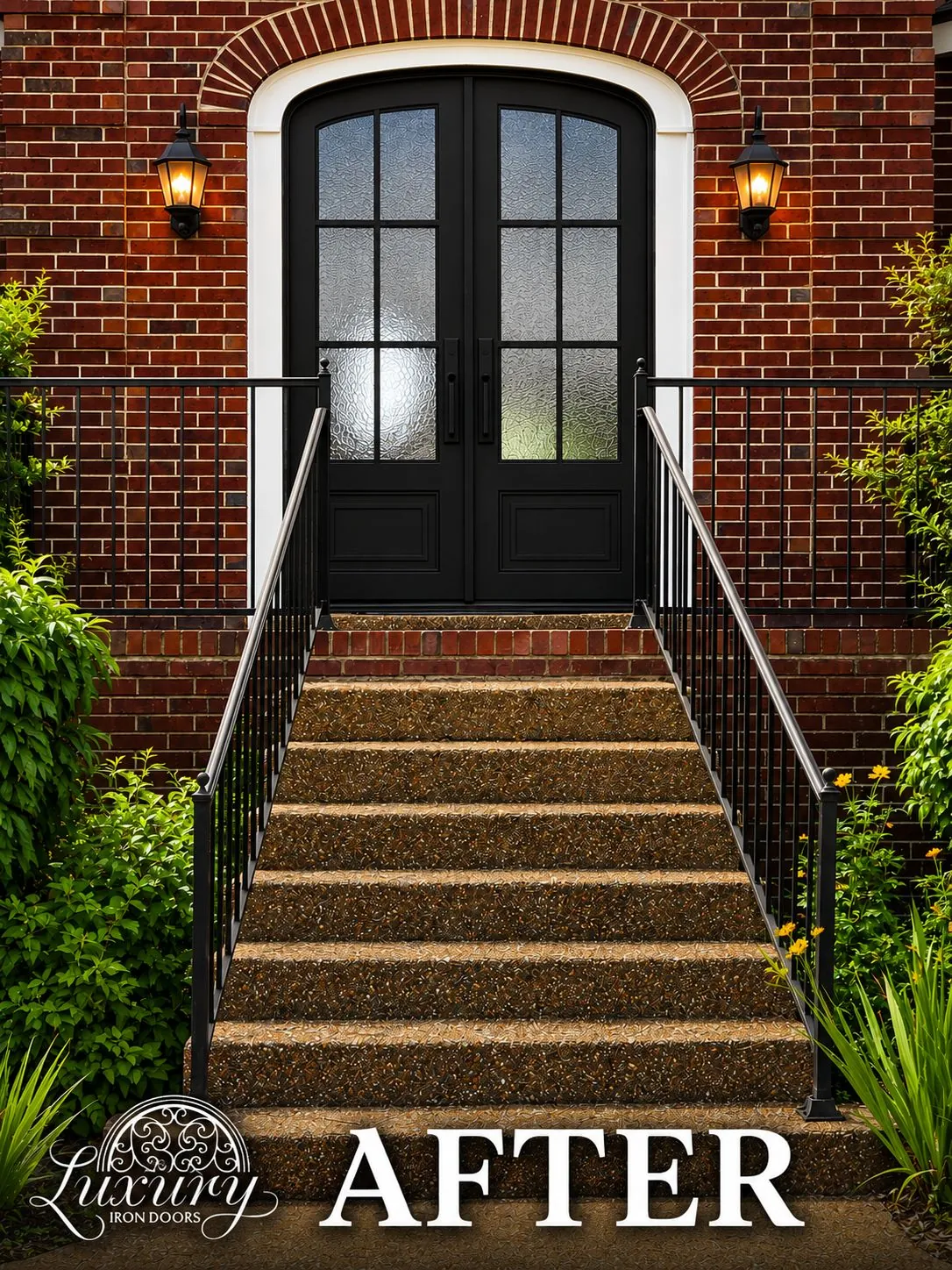
A simple seasonal care routine for an iron door
Most doors benefit from a quick seasonal routine, plus an extra look after unusual weather or exterior work nearby. Begin by brushing away loose dirt, pollen, or leaves from the threshold and lower frame. Clean the painted or finished surfaces with a soft cloth, mild soap, and water if the door maker’s care instructions allow it. Avoid aggressive abrasives, harsh chemicals, and anything that can dull or scratch a protective coating. Rinse residue gently and dry the surface rather than letting water sit in seams.
Then inspect the moving parts. Confirm that hinges, locks, and handles work smoothly, but do not assume every product is right for every finish or hardware system. Use only the lubricant and cleaning approach recommended for the installed hardware. If the door begins to drag, bind, or close differently, do not keep forcing it. A change in operation can be caused by hinges, hardware, weatherstripping, settling, or moisture around the opening, and it is better to identify the cause before it damages the finish.
Finally, step back from the entry and look for the conditions that create repeat maintenance. Does a sprinkler regularly hit the frame? Does a downspout empty too close to the step? Does a shrub keep the lower jamb shaded and damp? Is mulch or soil piled against the threshold? Fixing the source of moisture is more useful than touching up the same spot every few months.
Use a dry day for the best inspection. After a storm, it can be useful to note where water runs or sits, but wait until the door is dry before deciding whether a dark mark is moisture, dirt, or a finish problem. Look along the lower rail and frame with a flashlight, then run a clean cloth over the area. A rough edge, lifted paint, or orange residue on the cloth is worth documenting. A smooth, intact finish that simply looks darker when wet is a different condition.
Keep a short record when the entry has a recurring issue. One photo from the same angle each season can show whether a small spot is stable or spreading. Note nearby changes too, such as a new sprinkler pattern, a clogged gutter, exterior painting, masonry work, or landscaping that now holds moisture against the opening. This gives a repair professional useful context and keeps the conversation focused on the cause instead of only the visible mark.
- Clear the sill and drainage path. Remove leaves, dirt, and debris that can hold water against the bottom of the frame.
- Clean gently, then dry. Use a soft cloth and a mild method suitable for the door’s finish. Do not leave cleaner or rinse water in joints and corners.
- Check the coating and seals. Look for chips, scratches, loose weatherstripping, cracked sealant, or signs of water getting behind a finished edge.
- Test the door in normal use. Open, close, latch, and lock it. A door that changes operation is worth investigating.
- Correct the exposure. Redirect irrigation, clear a downspout, remove trapped debris, or improve drainage before the next weather cycle.
What to do about a small rust spot
First, distinguish a small surface issue from a bigger one. A limited spot at a fresh chip may be manageable, but rust that is lifting the surrounding coating, forming a deep pit, spreading along a seam, or showing up around glass or hardware is not a casual touch-up. Take clear photos before cleaning so you can track whether the condition changes.
For a small, isolated spot, follow the finish system and care instructions supplied for the door whenever they are available. The general sequence is to remove loose corrosion without damaging nearby finished surfaces, clean and dry the area, apply the appropriate corrosion-inhibiting primer if the system calls for it, and restore the compatible finish. Painting directly over active rust only hides the problem temporarily. It does not restore the barrier that the metal needs.
Be especially cautious with an older painted entry or trim. The U.S. Environmental Protection Agency’s renovation, repair, and painting guidance warns that work in homes built before 1978 can create lead dust when painted surfaces are disturbed. Before sanding or scraping an older painted surface, use lead-safe work practices or bring in a qualified professional. A rushed repair is not worth creating a household exposure issue.
Skip the urge to use a heavy wire wheel, harsh acid, or a generic aerosol coating on an architectural door without confirming that it matches the existing system. Those shortcuts can damage a decorative finish, affect adjacent glass or seals, and leave a repair that looks more obvious than the original chip. When the door is a focal point of the facade, an informed repair usually costs less than correcting a bad one.
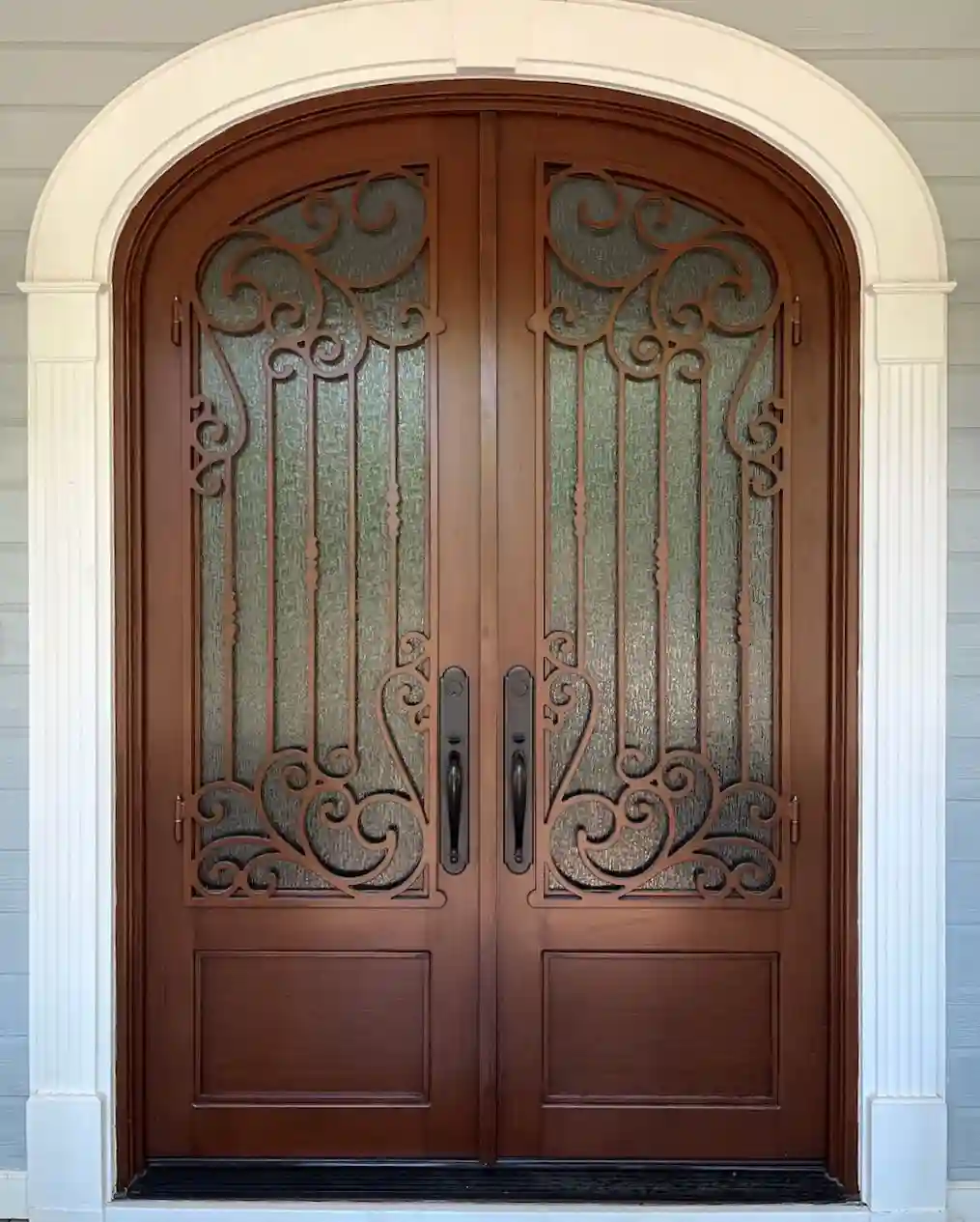
When rust needs more than homeowner maintenance
Call a door or metalwork professional when you see more than a small, contained surface spot. Warning signs include bubbling or peeling finish over a broad area, pitting in the metal, a seam that stays damp, rust around glazing or hardware, water collecting at the threshold, or a door that binds or has changed alignment. Those conditions can point to a drainage, seal, installation, or structural issue that should be addressed before cosmetic work begins.
Glass and weather seals deserve special care. If a rust mark appears beside a glass panel, do not pry at the stop or apply a coating that could bridge onto the glass. If water appears between glass layers, the seal has failed and needs a separate assessment. Likewise, a cracked bead of sealant or a loose sweep is not automatically a metal problem, but it can create a pathway for water to reach parts of the entry that were meant to stay protected.
Door operation is another useful clue. A door that suddenly rubs at the threshold, requires extra force to latch, or leaves an uneven gap may have a hinge, alignment, or surrounding-opening issue. Continuing to push it through the same motion can wear a finished edge and expose metal. Addressing the adjustment early protects both the door’s appearance and the daily experience of using it.
It is also worth getting advice when the door is exposed to a harsh environment. Salt air, pool chemicals, strong sun, frequent wind-driven rain, and very humid conditions do not automatically rule out an iron entry. They simply call for a more deliberate finish and maintenance plan. The right plan begins with the actual site, not a generic promise that every exterior door has the same needs.
For a custom entry, a repair conversation can also be a chance to assess the larger system. The threshold, frame, glass, weatherstripping, drainage, and nearby masonry all influence the long-term result. If an existing door has repeated corrosion in one area, solving the cause is the priority. Otherwise, the same issue can reappear after a beautifully finished touch-up.
Plan a new iron door with long-term care in mind
A well-planned iron door is not just a design decision. The opening, exposure, glass, threshold, finish, and installation details all shape how the entry lives with weather. That is why the process for custom entry doors begins with the home and opening rather than a one-size-fits-all product choice.
When you are comparing ideas, share photos of the full exterior, the threshold, nearby landscaping, roof runoff, and the interior side of the opening. Note how much sun and rain the entry receives, whether the home is near salt water or a pool, and whether privacy or large areas of glass are part of the plan. Those details help determine a sensible configuration before fabrication, along with the visual decisions covered in the wrought iron doors overview and the site’s custom options.
For many homeowners, care is not a reason to avoid iron. It is part of choosing a material with real presence and a custom fit. The trade is worthwhile when the door is designed around the project, installed with attention to water and operation, and maintained before small exposure points become larger repairs.
Planning a custom entry
Start with the opening and the exposure.
Luxury Iron Doors helps homeowners plan the configuration, glass, finish, and installation details around the home. Browse the door collection or request a quote for a project-specific conversation.
Request a quoteFrequently asked questions
Does wrought iron rust outside?+
Yes. Wrought iron can rust outdoors when moisture and oxygen reach unprotected metal. A quality finish, clear drainage, routine cleaning, and quick attention to chips or scratches all help limit that exposure.
How often should I inspect an iron door?+
A quick check each season is a sensible baseline. Inspect more often when the entry is exposed to salt air, heavy humidity, sprinklers, standing water, pool chemicals, or strong weather.
Can I paint over rust on an iron door?+
Do not paint directly over active rust. First determine whether it is a small surface spot or a larger repair issue. Remove loose corrosion as appropriate for the coating system, clean the area, use the recommended primer and finish, and follow the door maker or installer’s care guidance.
When should I call a professional about rust?+
Call for help when rust is spreading under the finish, the metal is pitted or perforated, glass or weather seals are affected, the door is binding, or water is collecting around the sill. Those signs can point to a detail that needs more than a cosmetic touch-up.